Hailing from Marinha Grande, Monomonkey began as a close-knit circle of friends driven by a single goal: to build a musical project that mirrored their own tastes and anxieties. They aimed for something that honored the classic bones of indie pop-rock—simple, melodic, and raw—but draped it in the moody, fluid textures of “urban-depressive” music. It was a sound that echoed 90s urban rock with a touch of 2000s pop, drawing close to the atmospheric territory explored by bands like Interpol.
The group took its first steps back in 2000, but for nearly four years, they existed in a sort of creative limbo. During this time, their production remained a well-kept secret, shared only within the tight circle of local friends who followed them. It wasn’t until 2004 that the band “officially” came to life, sparking a creative shift toward more mature songwriting. Some of these early tracks proved resilient enough to withstand the test of time, eventually finding a home on their debut album years later.
That same year marked their transition from the rehearsal room to the stage. In November 2004, they made their live debut in their hometown during the second session of the Set04 Festival. The performance was met with warm reviews, and the set left a lingering sense of promise in the air. By 2006, the lineup finally found its balance with Ricardo Simões on guitar, Bruno Julião on drums and vocals, Pedro Lemos on guitar, and David Silva on bass and vocals.
David was the final piece of the puzzle, stepping in for the original bassist, Pedro Afonso. Reflecting on that era, the bassist noted: “When I joined, there were already some songs written; with my arrival, the composition ended up evolving within the same vibe. This work ends up being a mix of those two parts.” This period of growth culminated in May 2006 with the recording of the “In Danger” demo, whose tracks quickly began to resonate with a growing audience.
In October 2006, the band caught the attention of the British digital label Dawg Records. However, the musicians felt the recorded themes didn’t quite meet the quality standards necessary for an official release. Jonathan Miller, the label’s editor at the time, urged them to remaster the tracks, but the idea was ultimately scrapped. The original recording process was simply too limited to allow for the kind of polished treatment the producer had in mind.
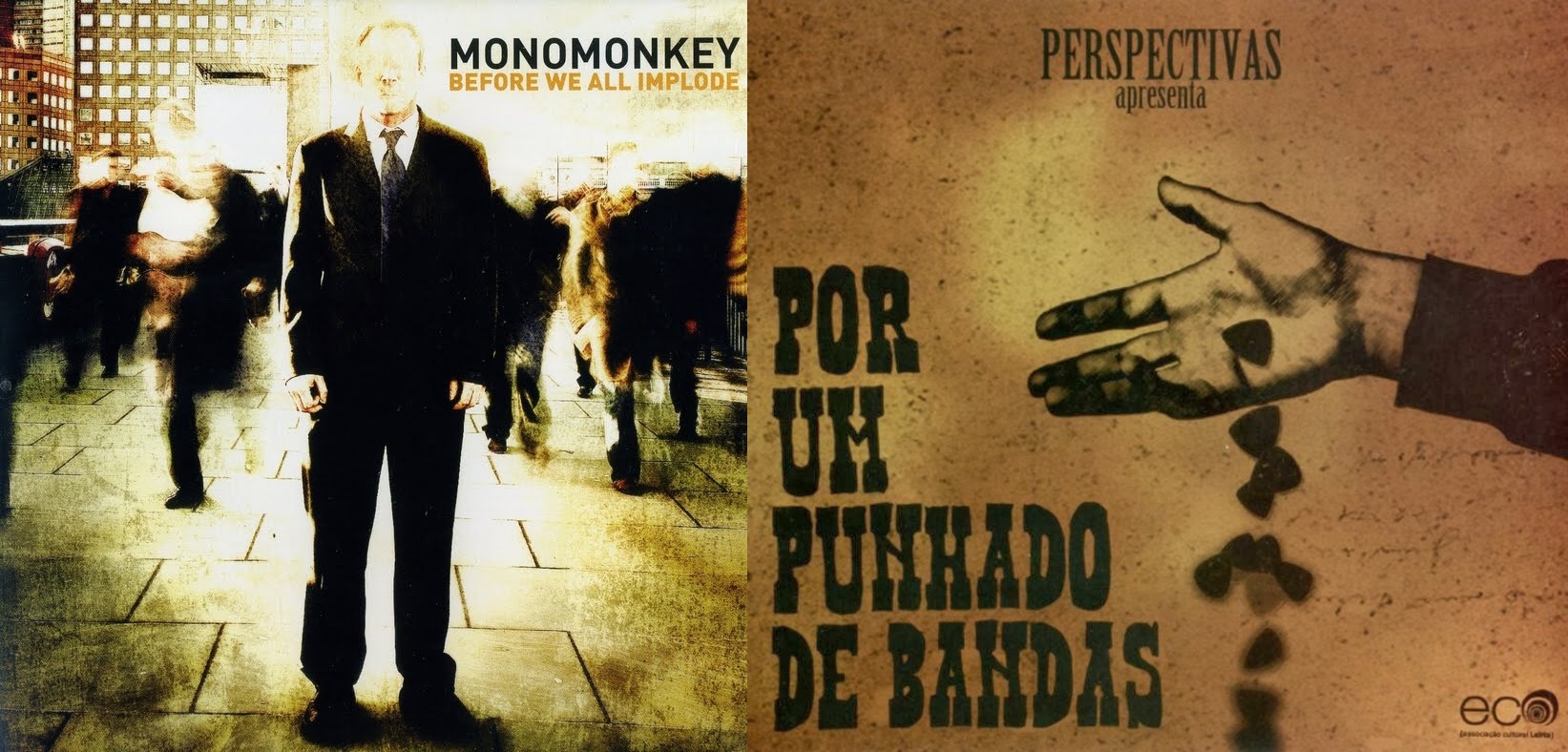
This technical setback turned out to be a detour rather than a dead end. By February 2007, Rastilho Records stepped in, revealing their interest in signing the group for a full album contract. In October of that year, Monomonkey finally entered Marduc Studios to begin the recording process for what would become their definitive statement: the album Before We All Implode.
Produced by the influential Marco Jung, the long-awaited full-length album hit the shelves in April 2008. It stood as the culmination of nearly a decade of friendship and creative evolution. However, in a twist as moody as their music, the band fell into silence shortly after the release. Since that time, the trail has gone cold, and nothing more has been heard from the group.