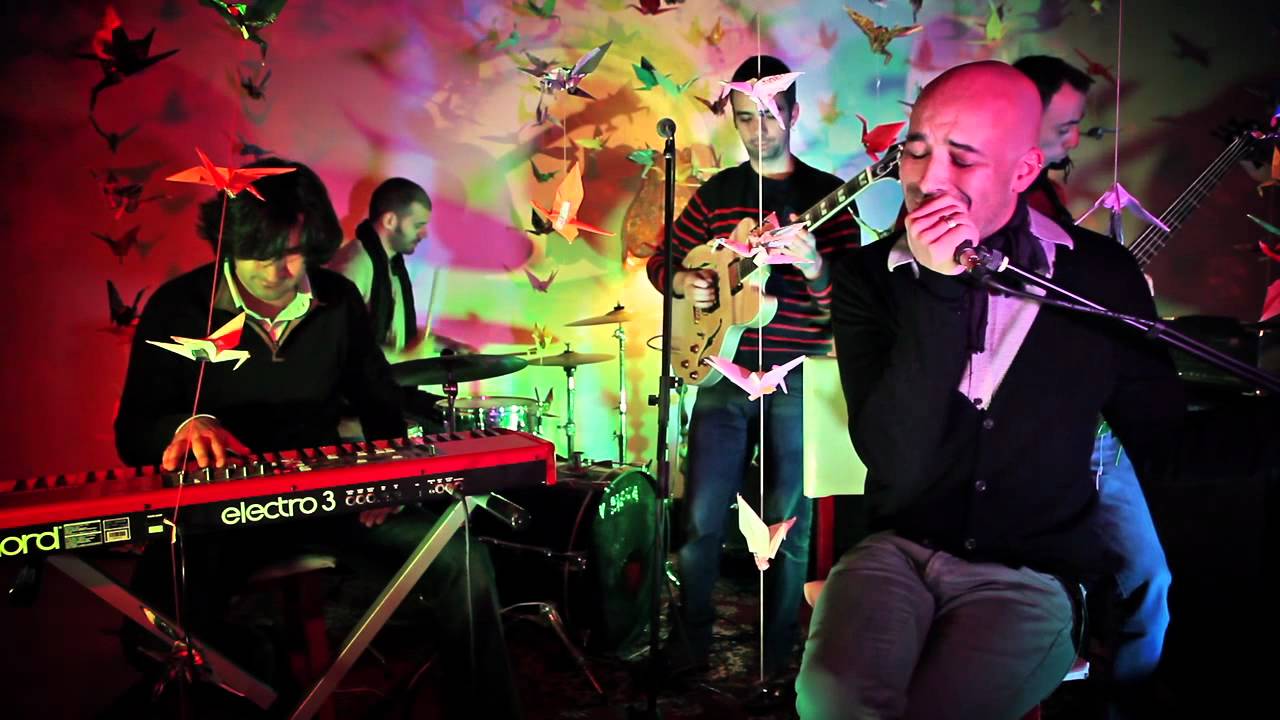
It all began in Viana do Castelo in 1997, when a sextet of musicians decided to join forces. It didn’t take long for the project to start gaining visibility in the music scene, driven mainly by the release of their first demo, which bore the melancholic and intriguing title “Bonjour Tristesse.”
In its initial lineup, the band relied on the creativity of Juvenal Vieira on vocals, Rui Pedro Amaro on guitar and trumpet, Artur Fontinha also on guitar, Paulo Gonçalves on bass, Rui Alves on drums, and Paulo Oliveira splitting his time between the violin and the concertina. Together, they gave life to a unique pop sound that drew directly from sources far removed from what was usually heard in the genre.
The group’s sound was a true cultural patchwork, where anything that sparked their artistic interest could fit. The result was incredibly interesting, blending references ranging from the genius of Serge Gainsbourg and Astor Piazzolla to the alternative rock of dEUS and Tindersticks, passing through the minimalism of Pascal Comelade and the post-punk melancholy of Joy Division—of whom they even performed a striking cover of “Love Will Tear Us Apart.”
This multifaceted talent was soon recognized in competitions. Madame Godard won second place in the prestigious Termómetro Unplugged contest in 1999, in addition to coming out on top in several other lesser-known competitions, solidifying their place in the musical landscape of the time.
From their very first chords, the band made it clear that eclecticism was their trademark, fearlessly embracing a vast and diverse range of musical influences. Their soundscapes were authentic acoustic paintings, where the use of trumpets, violins, and vintage keyboards transported listeners to unique, cinematic settings.
With experimentation and creative freedom serving as the absolute guides for all their work, the group defied musical boundaries. They were capable of crossing the delicacy of chanson française with the warmth of South American rhythms, while also mixing sixties pop and rock with the vibrant funk of the seventies.
To make everything even more fascinating, the band’s sound balanced between the “concerted confusion” typical of Eastern European music and the unpredictable, disconcerting logic of Quentin Tarantino’s movie soundtracks. This explosive mix didn’t take long to bear fruit outside the rehearsal studios.
Both audiences and critics were won over after a memorable performance at the Paredes de Coura Festival, leading Blitz magazine to name them one of the great promises of Portuguese music for the year 2000. This impact served as a springboard for a long tour that crossed domestic and international borders, allowing them to share the stage with living rock legends such as Iggy Pop, Sonic Youth, and dEUS.
However, Madame Godard’s path never followed the obvious or commercial route. By choosing difference as the pillar of their work, and without any rush to yield to trends just to please the general public, the musicians preferred to let their ideas mature over time, focused on a constant search for artistic self-improvement.
This sonic maturity eventually flourished much later, the fruit of a contemplative musical approach. The final result reflects a body of work that manages to be simultaneously delicate and colorful, stripped-down and complex, currently championed on stage by Juvenal Vieira (vocals, theremin), Pedro Amaro (guitar, banjo, trumpet), Paulo Oliveira (keys, violin, theremin), Paulo Gonçalves (bass, claps), and José Ribeiro (drums).