
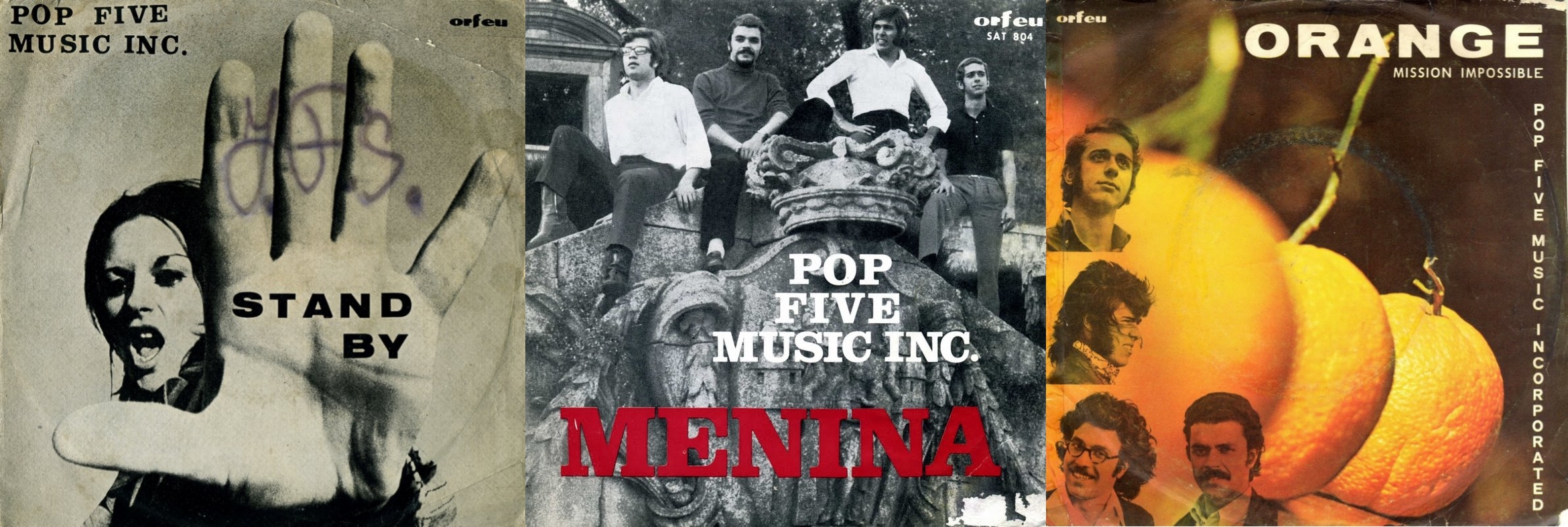
If you think high-quality rock in Portugal was only born in the 80s or 90s, you need to travel back to the Porto of 1967. That was the birthplace of Pop Five Music Incorporated, a band with a sound so advanced it could go head-to-head with anything being made in England or the US. Far more than just rocking the big dances and massive youth crowds at Quinta da Conceição, they were technical pioneers, becoming some of the first around here to record in stereo and venture into cutting-edge studios.
Their recording debut came in 1968 with the EP Those Were The Days, which featured the addictive “You’ll See,” written by Tozé Brito. Shortly after, the band released another EP focused on surgical reinterpretations of classics from that era, treating the Portuguese public to groove-filled versions of tracks like The Beatles’ “Ob-La-Di, Ob-La-Da” and The Band’s “The Weight.” The group truly mastered the art of putting a fresh spin on the pop music of the time.
This sonic signature became even clearer on the album A Peça. In this work, Pop Five fused the sophistication of classical music with the raw energy of avant-garde rock. The record lined up, side by side, arrangements of classical composers and muscular covers of giants like Jimi Hendrix, Creedence Clearwater Revival, the Bee Gees, and George Harrison, consolidating the quintet’s instrumental eclecticism.
With the departure of David Ferreira and Tozé Brito, the arrival of classical pianist Miguel Graça Moura shifted the band’s direction, leading them to focus on original compositions sung in Portuguese. It was from this new phase that the iconic single “Page One” was born in 1970. The song blew up to such an extent that it became the anthem for the program Página Um on Rádio Renascença and opened the doors to the international market.
The success of “Page One” and the subsequent single, “Orange,” crossed borders, and the records were released in Brazil, the Netherlands, France, Germany, and Australia. Interestingly, abroad, many preferred to spin the B-side of “Page One”: an absolutely incredible rock version of Bach’s “Air on the G String.” This recognition took them all the way to London, where they recorded their final three singles at the mythical Pye Studios.
In 1971, the band reached its peak by sharing the stage at the historic Vilar de Mouros Festival with legends like Elton John and Manfred Mann. However, mandatory military service cut the journey short in 1972, forcing the group to disband. Its members scattered throughout the history of Portuguese music, fueling projects like Arte & Ofício and Trabalhadores do Comércio, as well as collaborating with Sérgio Godinho.
Thirty-five years after their farewell, Pop Five’s musical DNA proved to be timeless. The original lineup reunited for a one-off concert at the Estado Novo nightclub—a historic moment that ended up immortalized on DVD in the compilation Odisseia – Obra Completa 1968-1972, released in 2004. It is an essential release for anyone looking to discover the Holy Grail of Portuguese psychedelic rock.

No “Flashback” de hoje, viajamos até 1967 para recordar os Pop Five Music Incorporated, pioneiros do rock psicadélico em Portugal. Nascida no Porto, a banda cruzou fronteiras com o superêxito “Page One” e chegou a partilhar o palco de Vilar de Mouros com Elton John. Uma viagem no tempo cheia de groove, sofisticação e clássicos que moldaram a nossa história musical. Fique desse lado!