Maria de Lourdes Resende was much more than a voice; she was the personification of a golden era of radio and music in Portugal. Born in Barreiro in 1927, she demonstrated from an early age that her destiny was written between sheet music and microphones, beginning her artistic journey as a young girl. Her trajectory was not just a succession of hits, but the construction of a cultural identity that spanned decades and generations.
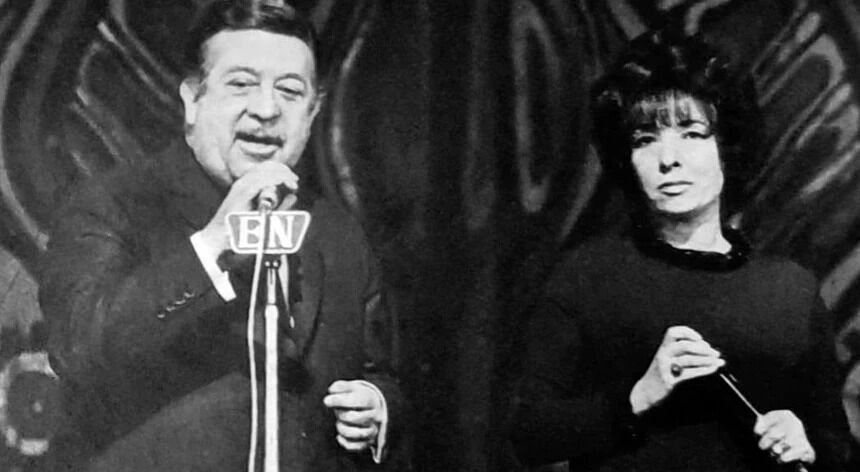
Her professional debut took place in a context where radio was the main window to the world and the center of domestic entertainment. With a magnetic presence and impeccable pitch, she quickly stood out in the variety programs of the Emissora Nacional, winning over the audience with her versatility. It didn’t take long for her talent to cross the borders of radio, leading her to explore revue theater and record albums.
One of the most significant milestones of her career was, without a doubt, her victory at the first Portuguese Song Festival, held in Figueira da Foz in 1958. By performing the song “O Fado de Portugal,” Maria de Lourdes Resende consolidated her status as one of the greatest national performers. This victory was not just a trophy on the shelf, but the official recognition of an artist who knew how to sing the soul of the people like few others.
The song that would forever be linked to her image and became an unofficial anthem of a region was “Alcobaça.” With immortalized verses that spoke of love and tradition, she managed to put the city on the emotional map of all Portuguese people. The way she interpreted this theme carried a sweetness and elegance that became her trademark over the years.
Over several decades, her discography grew impressively, covering hundreds of songs ranging from fado to popular marches and light music. She had the rare ability to move between musical genres without ever losing her essence or artistic dignity. This versatility allowed her to remain relevant in a musical market that changed drastically throughout the 20th century.
Maria de Lourdes Resende did not limit her success to Portuguese soil, taking her art to various corners of the world where Portuguese-speaking communities existed. Her tours through Africa, Brazil, and Europe were received with immense affection, serving as a link between emigrants and their homeland. She was, in many ways, an ambassador of Portuguese culture and sentiment abroad.
Critics of the time and her peers always described her as an exemplary colleague and a professional of extreme rigor. Beyond her privileged voice, her stage presence was one of distinct sobriety, preferring the vocal interpretation to be the center of all attention. She never needed gimmicks to shine, as her natural talent was more than enough to fill any auditorium.
Recognition of her contribution to national culture also came through official honors, including the Order of Prince Henry. These distinctions highlighted the importance of a career dedicated to the preservation and promotion of quality Portuguese music. For Maria de Lourdes, singing was a form of service to the country and the language she loved so much.
As the years passed and musical tastes changed, she knew how to withdraw from the big stages with the same elegance she had entered them. However, her legacy remained alive through the reissues of her records and the memories of those who grew up listening to her voice through the radio waves. Her name was etched in history as the Queen of the Radio, a title she held with humility.
The news of her passing at 95 years of age brought a wave of nostalgia and sadness to the Portuguese artistic landscape. Maria de Lourdes Resende passed away in Lisbon, leaving behind a vast musical legacy that continues to be a reference for new singers. Her death marked the end of an important chapter in the history of Portuguese light music, but her voice remains immortalized.
Many remember her not only for her vocal technique but for her ability to tell stories through the words she sang. There was a deep humanity in her delivery, which made every listener feel that she was singing directly to them. This emotional connection is what distinguishes great artists from mere performers, and she possessed it in abundance.
The tributes that followed her death highlighted her artistic longevity and the consistency of her journey. From the marches of Lisbon to the most melancholic fados, she knew how to give voice to the different moods of the Portuguese people. Her presence was synonymous with an era when music had a different time and space, focused more on narrative and melody.
It is impossible to talk about the history of radio in Portugal without dedicating an extensive chapter to her figure. She was one of the pioneers who helped define what it meant to be an entertainment star in a country that was still discovering the power of mass media. Her professionalism served as a school for many who came after, setting standards of excellence.
Even in her final years of life, she maintained a lucidity and affection for the profession that never faded. She received recognition from younger generations with gratitude, realizing that her work had left seeds that continued to sprout. The simplicity with which she viewed her own success was perhaps her most admirable characteristic.
The legacy of Maria de Lourdes Resende is a treasure that deserves to be preserved and revisited frequently. In times of disposable music and ephemeral hits, the solidity of her career serves as a reminder of the importance of training and dedication. She proved that artistic quality has no expiration date and that authenticity is the key to immortality.
Today, when we listen to classics like “Não Percas a Esperança” or the mythical “Alcobaça,” we are transported to a Portugal of another time, but with feelings that remain current. Her voice is a safe harbor, a blend of comfort and technical beauty that continues to enchant those who discover it for the first time. She remains a mandatory reference for any study of national song.
The physical farewell of the artist does not erase the brilliance of what she built over nearly a century of life. Sound libraries and public television archives ensure that future generations can witness the talent of a woman who was, above all, faithful to her art. Her story is a life lesson on how to age with dignity while maintaining the respect of the public.
Maria de Lourdes Resende has departed, but her music continues to echo, reminding us that true art is that which survives time. She will always be remembered as the voice that cradled dreams and gave brilliance to the radio afternoons of millions of Portuguese. Her place in the pantheon of great figures of Portuguese culture is more than assured.
She passed away on the night of November 25, 2022, at her residence in Lisbon, at the age of 95.