In a world dominated by speed, Artificial Intelligence has invaded music creation with synthetic tracks generated in seconds. In addition to flooding platforms with disposable sound, these AI models are often trained using the work of human artists without their consent or compensation, raising serious ethical and copyright issues. We thus face a decisive choice: do we want to feed a market of extractive algorithms, or do we prefer to value and protect the art that truly moves and defines us?
The answer lies in the essence of the creative act, where technique intersects with real lived experience. A robot can process data and simulate harmonies, but it will never know what it feels like to long for home, face social dilemmas, or carry the heritage of a language. True art stems from human vulnerability, from a voice that trembles in a moment of pure devotion, and from the imperfection that creates magic. When algorithms prioritize mere repetitive mathematical formulas, we risk homogenizing global culture, erasing the originality and diversity that only real-life experiences can produce.
In Portugal, music is the living reflection of our identity, bridging tradition with the new waves of pop, hip-hop, indie, and electronic music. When robotic music replaces the consumption of real authors, the impact is devastating for the economic sustainability of an entire value chain: musicians, songwriters, poets, and sound technicians lose their livelihoods. AI can recreate formulas of the past in milliseconds, but it will never build a community, nor will it support the financial survival of those who dedicate their lives to creating cultural heritage in Portuguese.
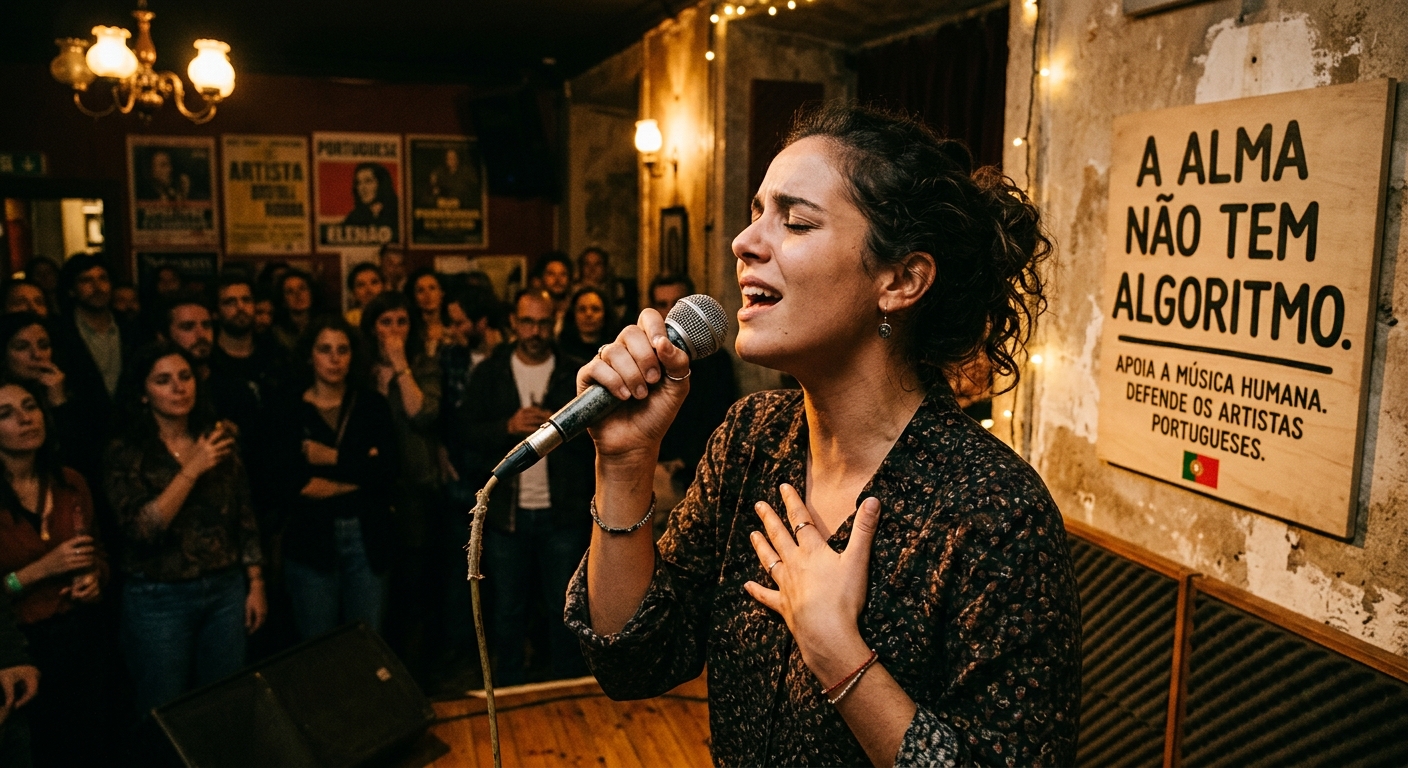
Change requires a conscious stance from every listener, who holds the power to stop this devaluation of art. Supporting human-made music means listening to national releases intentionally, demanding transparency from streaming platforms regarding AI-generated content, sharing new talent, and buying physical editions. Above all, it means filling venue halls, because no server in the world can replicate the visceral, unrepeatable energy of a crowd singing the same chorus in unison at a live show.
It is time to raise our voices against robotic standardization and defend those who create with heart, skin, and history. Technology can serve as a technical support tool, but the creative spark and the value of a work belong and will always belong to human beings. The next time you put on your headphones, reject algorithmic plastic and choose national talent: support Portuguese artists and ensure that our culture remains alive, fair, and authentic.