
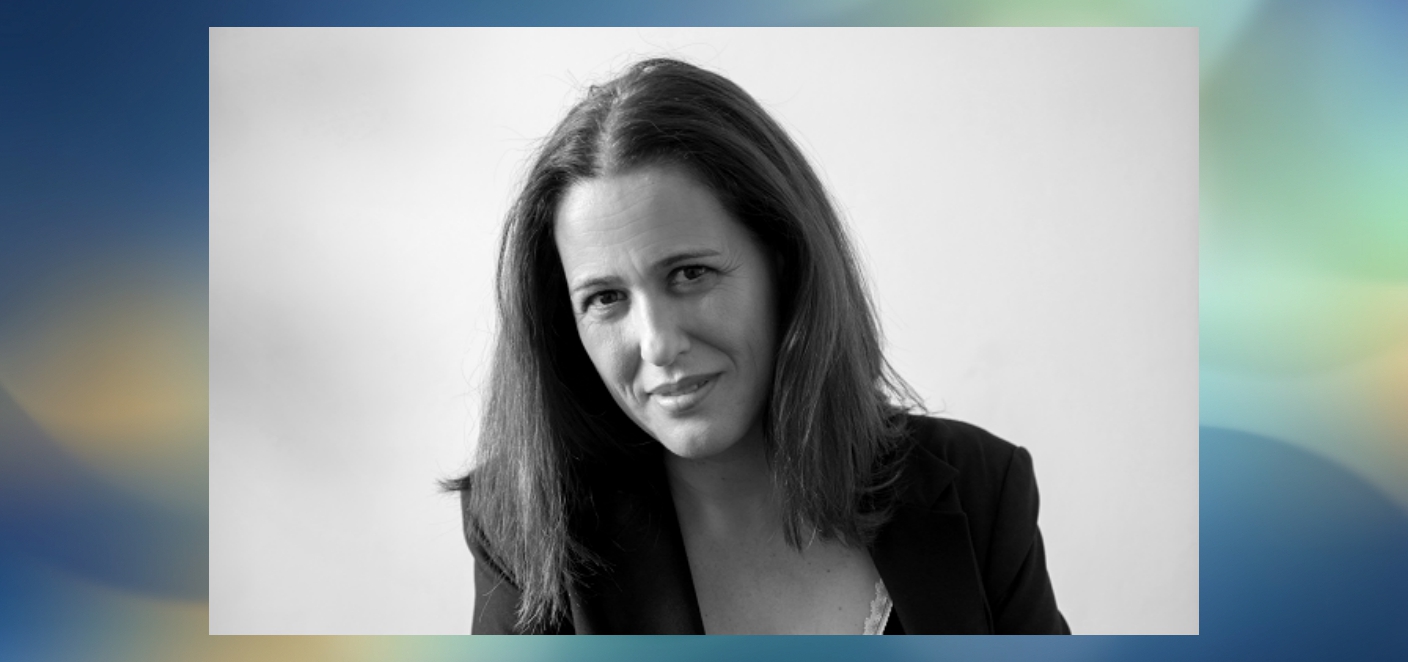
Speak about Aldina Duarte is to speak of one of the most fascinating, cultured, and uncompromising figures in contemporary fado. Born in Lisbon in 1967 and raised in a social housing neighborhood in Chelas, the artist followed an unconventional path before surrendering to music. Far removed from traditional fado circles during her childhood and youth, her relationship with the art form began late in life, but with an overwhelming intensity that would go on to redefine the boundaries of the genre.
The major turning point in her life occurred in her early adulthood when she walked into a fado house in Bairro Alto and heard the legendary Beatriz da Conceição perform live for the first time. That moment acted as an emotional epiphany that transformed her forever. From then on, Aldina immersed herself heart and soul in a self-taught journey of deep listening, collecting repertoire, reading poetry, and closely interacting with the masters of traditional fado.
Before establishing herself as a singer with an unmistakable voice, she distinguished herself behind the scenes as a lyricist, researcher, and cultural activist. She organized the famous fado nights at Teatro da Comuna and worked closely with prominent figures, writing and selecting repertoires—most notably through her creative and personal bond with the fado singer Camané. This behind-the-scenes work shaped her deeply, granting her a unique artistic authority and a literarily rich lyrical style.
It was only in 2004, at the age of 37, that she made her recording debut with the acclaimed Apenas o Amor, a milestone that proved maturity and critical thought could bring a fresh perspective to fado. This album was followed by essential works such as Crua (2006), composed entirely of traditional fados, and the award-winning Tudo Recomeça (2022), which won Best Fado Album at the Play Awards. Over the years, Aldina has consistently rejected easy commercial formulas, choosing instead to sing the word with a distinct restraint and dramatic raw authenticity.
Beyond music, the artist has expanded her sensitive expression into cinema, featuring in films by directors like Manuel Mozos and Eugène Green, as well as into literature through co-authoring essays and poetic reflections. For Aldina Duarte, fado is not merely night-time entertainment or a tourist product; it is a space for critical thinking, civic engagement, and absolute reverence for tradition and poetry.
Her timbre, tempered by truth, combined with her literary approach to each composition, makes her a true sculptor of silence. In an era where everything is ephemeral, Aldina continues to demonstrate that slowness, reflection, and aesthetic rigor are true art’s greatest allies. She is undoubtedly an irreplaceable voice that honors the past while carving out remarkably intelligent paths for the future of fado.
Greatest Hits and Notable Songs
- “Ai Meu Amor se Bastasse” (from the album Apenas o Amor, 2004) — Featuring lyrics by Manuela de Freitas set to Fado Pedro Rodrigues, this became one of the key anthems of her early discography.
- “Deste-me Tudo o que Tinhas” — A highly dramatic track that highlights the raw emotional commitment characteristic of the singer.
- “A Voz e o Silêncio” — A song where the alchemy between poetry and empty space takes on an impressive resonance.
- “Rosa Enjeitada” (featuring António Zambujo) — A memorable duet uniting two of the most distinct and sophisticated voices in contemporary Portuguese music.
- “Princesa Prometida” — An intimate piece that also inspired the homonymous documentary about her life and artistic journey.

Thank you again for highlighting her… I know she’s not Mariza, but here in the US a parallel case would be Billie Holiday and Ella Fitzgerald; they both have very different talents and use them well.
I will find out more about them!
I really thought you are portuguese, sorry about that!
Please keep in touch if you find more portuguese bands and projects, and thank you soo much for your support!
I only learned about Aldina Duarte thanks to a Lisbon restaraunteur playing her DVD while we dined — genuinely my first exposure to fado. For practically everything else I have to thank the concierge at our hotel in Porto, who told me where the FNAC is and gave me a shopping list including Amália and José Afonso, and also the annual FNAC Novo Talentos samplers. (I bet I spent 150 euros in that shop.) Enough of it stuck that I made sure we went to see Mariza when she played NYC’s Town Hall a few years ago.
What a fantastic story!
The spontaneous way you discovered Aldina Duarte in a Lisbon restaurant has a unique magic to it. And the concierge’s suggestions in Porto were spot on: Amália is the essence of fado, Zeca Afonso is the country’s historic voice, and Novos Talentos FNAC are perfect for discovering the current musical scene.
Seeing Mariza at Town Hall in New York City shows just how much of an impact Portuguese music left on you.
Have you had the chance to explore artists like Carminho or António Zambujo?
Carminho, yes (I have 2 or 3 hours), António Zambujo, no, sorry. I keep looking forward to more from Gator, The Alligator, another group on one of those FNAC samplers. There were plenty I plunged in on on the basis of what was in the FNAC racks (Jose Cid, Resistencia, Rui Veloso, for instance) and all in all I was really pleased with the results. (Yet I’m confident my awareness is still only that of a tourist’s.) I tried to repeat that success in Athens and Mexico City, but it didn’t work out quite as well. I had better luck in Rome, and I >strongly< recommend Ginevra Di Marco, if you want to stick your toe in there; she’s probably the biggest find for me in the last ten years.
I’m so happy to know that there are people around the world from different cultures who are genuinely interested in Portuguese music! It’s simply fantastic! 🙏😊