
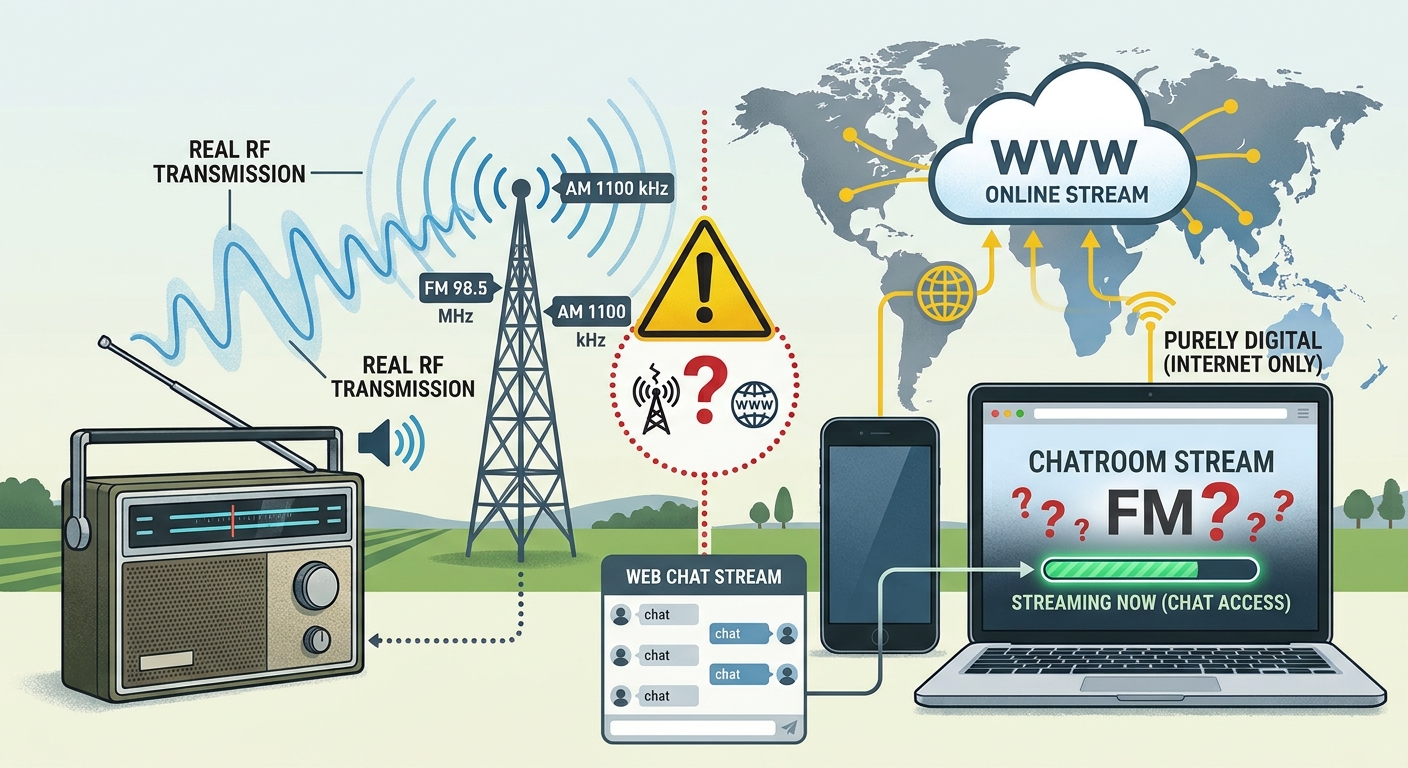
If you have ever looked for a new station to listen to on the Internet — or browsed platforms like Xat.com —, you have likely come across hundreds of chat rooms and audio players displaying names like “Melodia FM Radio”, “Mega Hits Online FM”, or “VIP AM/FM Radio”. In the vast majority of cases, these broadcasts are transmitted exclusively over the network.
This phenomenon raises an important question: why do so many purely digital radio stations insist on carrying the acronyms FM or AM in their names, what is the difference between these technologies, and why is this practice incorrect?
1. Understanding the Technologies: AM, FM, and Online Radios
To understand the confusion, one must first look at how each technology carries sound to our ears:
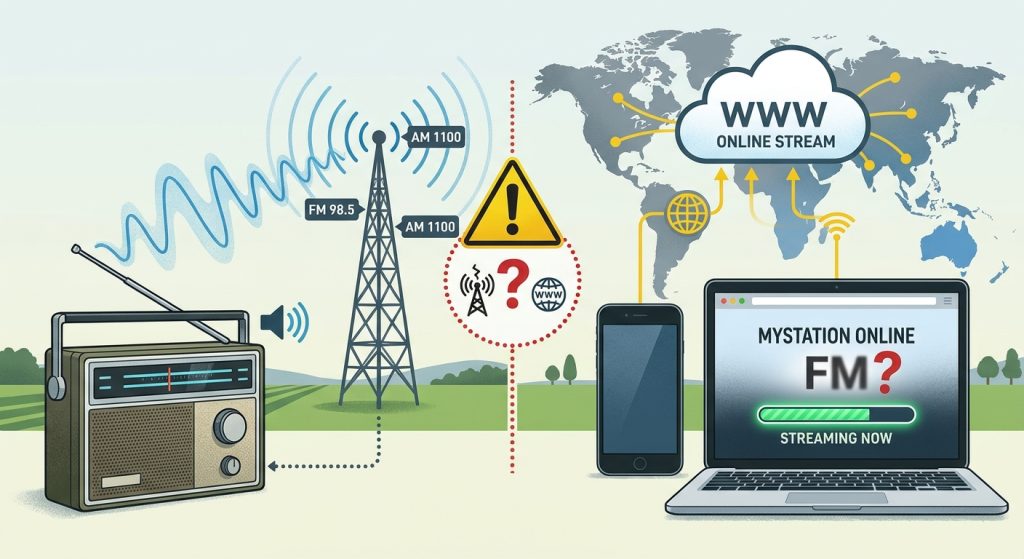
- AM (Amplitude Modulation): This is the oldest radio technology. It modulates the amplitude of the carrier wave to transmit sound. It has a very vast geographical reach (especially at night, due to ionospheric propagation), but the audio quality is lower and highly susceptible to atmospheric and electrical interference.
- FM (Frequency Modulation): Created to overcome the limitations of AM, it alters the frequency of the carrier wave. It offers high-fidelity stereo sound that is much cleaner. However, its range is limited by line-of-sight (usually restricted to a few dozen kilometers from the transmitting antenna).
- Online Radios (Internet Streaming): They do not use hertzian waves or the traditional radio spectrum. The audio is converted into digital data (streams in formats such as MP3 or AAC) and transmitted over the internet via servers (such as Shoutcast or Icecast). Anyone with a network connection can listen to the broadcast on a computer, smartphone, or smart speaker.
2. The Illusion of Acronyms: From Marketing to Amateurism in Xat Chat Rooms
Including the acronyms “FM” or “AM” in the name of a strictly digital radio station serves clear psychological goals, ranging from marketing to a simple attempt to grab attention:
- Tradition and Prestige: For decades, the word “FM” was synonymous with quality and professionalism. Adding these letters to the name gives the false impression that it is a solid, licensed station with professional studios.
- The Case of Web Radios and Xat Chat Rooms: On platforms like Xat, it is extremely common to see chat rooms with integrated web radios using “FM” in the name just to show off. The vast majority of these radios have no professional structure, broadcasting license, or real radio equipment:
- They are often managed by amateurs or enthusiasts from home.
- They use simple broadcasting software (such as Winamp, VirtualDJ, or Sam Broadcaster) to transmit personal playlists.
- They use the “FM” suffix as a mere visual embellishment and gimmick to attract visitors to their chat rooms, attempting to convey a status they do not actually possess.
3. Why Should These Acronyms Not Be Used for Online Radios?
Despite being a widespread practice in the digital medium, there are fundamental reasons why a purely online radio should not use AM or FM in its name:
- Misappropriation of Technical Terms: AM and FM are not adjectives or registered trademarks; they are technical acronyms of physics and telecommunications engineering (Amplitude Modulation and Frequency Modulation). Using them for an internet broadcast is the technical equivalent of calling a YouTube channel “cable television”.
- Misleading the Public and False Information: This practice deceives the audience. Someone who finds a “new FM radio” on the internet assumes they can tune in to it on their car radio or traditional home receiver using the frequency dial (for instance, at 98.5 MHz). When they try to tune in and only find static, they realize they were misled.
- Lack of Rigor and Transparency: For a digital project, publicly declaring itself as a Web Radio or Online Radio shows transparency and pride in the medium in which it operates. Using “FM” merely to feign a physical or professional scale that does not exist discredits the project itself among more discerning listeners.
- Unfair Competition in Brand Perception: It attempts to piggyback the image of a home-made or chat-room radio onto the reputation of licensed professional broadcasters, which invest thousands of euros in spectrum licenses, regulatory fees, and infrastructure such as transmitters and antennas.
4. Legal Implications and Regulatory Oversight
Beyond technical inaccuracies and misleading marketing, using “FM” or “AM” without a legitimate broadcasting license can cross legal boundaries:
- Unlawful Use of Regulated Designations: In many jurisdictions, broadcasting media, call signs, and frequency designations are strictly regulated by national telecommunications authorities (such as Anacom in Portugal, Ofcom in the UK, or the FCC in the US). Falsely claiming or implying operation over licensed radio spectrum can be classified as deceptive commercial practice or unauthorized usage.
- Regulatory Investigations: Misleading branding that deceives consumers or attempts to pass off an unlicensed stream as a licensed radio station can trigger formal investigations by broadcast regulators, consumer protection agencies, and copyright monitoring bodies.
- Fines and Shutdowns: Web projects that persistently use official radio frequency designations or mirror existing licensed station names face cease-and-desist orders, domain seizures, heavy fines, or immediate stream termination by host providers.
5. The Illusion of Professionalism: Behind the Facade
At first glance, a web radio carrying an “FM” tag might project an aura of authority and credibility. However, a quick analysis usually reveals a very different reality:
- No Live Hosts or Broadcasters: Rather than structured programming with real presenters, news bulletins, or curated shows, many of these stations are simply automated, endless music playlists playing on loop.
- No Real Audience: Despite the flashy branding, these stations often have virtually no active listeners beyond the room owners or a handful of idle chat room users.
- Zero Professional Infrastructure: Beneath the grandiose name lies no studio, no soundproofing, no professional mixing console, and no regulatory compliance—just an automated software script running on a personal computer.
Ultimately, using “FM” or “AM” creates a superficial facade: the station appears professional on paper, but upon closer inspection, it lacks hosts, listeners, and any real substance.
6. The Reverse: Traditional FM/AM Radios with Online Broadcasting
There is also the opposite, legitimate scenario. Many established, professional radio stations — which were born and physically operate on FM or AM frequencies — also transmit their signal simultaneously over the internet.
In this case, using “FM” or “AM” in the name is entirely correct, as it reflects the station’s actual presence on the radio spectrum. The online broadcast serves as an indispensable complementary channel to:
- Reach the diaspora and international listeners who wish to follow local broadcasts from anywhere in the world.
- Ensure clean audio in urban areas or indoor locations where traditional radio signals suffer from interference.
- Allow access on devices without hertzian tuners, such as computers and most modern smartphones.
Conclusion
In the internet era, the “FM” label has ceased to be exclusively a technical term about electromagnetic waves and has often turned into a marketing gimmick or a simple visual accessory used by amateur web radios.
While the “FM” moniker may initially fool an unsuspecting visitor into expecting a polished station, closer examination reveals that many of these projects have no announcers, no audience, and no actual broadcast infrastructure—and in some cases, this practice can even attract scrutiny and penalties from telecom regulatory agencies. For reasons of legal compliance, clarity, transparency, and technical rigor, exclusively digital radios should abandon these acronyms and embrace their true identity: that of Web Radios.find their favorite content.