
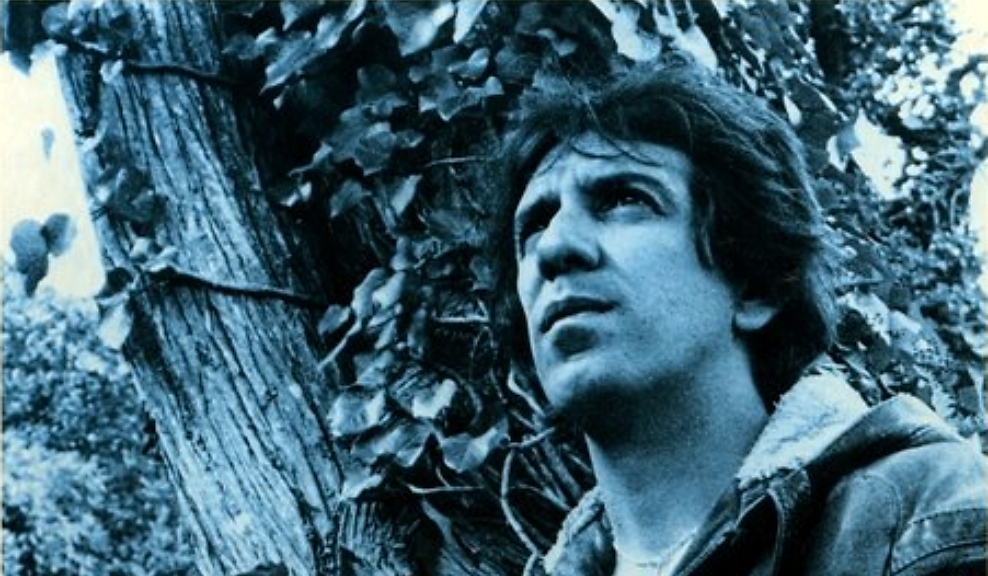
The history of Portuguese music firmly establishes Tó Neto as a primary pioneer of national electronic music. His trajectory is particularly curious due to a series of geographical and creative transitions: born in Luanda on October 19, 1955, he only moved to Portugal in 1973. It would take another decade for his debut record to finally materialize, arriving exactly when the Portuguese “rock boom” was opening the market to a fresh, urban soundscape.
That debut, titled “Láctea,” was famously premiered at the Calouste Gulbenkian Planetarium, the source of its iconic cover art. Today, the album exists as a fascinating cultural object: while it once represented a 1980s vision of the future, its reliance on period-specific synthesizers and rudimentary drum machines now gives it a “lo-fi” charm. It sounds like a snapshot forever frozen in time, capturing a fleeting moment where technology and imagination first met.
Musically, the album balances several distinct worlds, occasionally leaning into 1970s progressive rock influences. The opening of the track “Zuzu,” for instance, draws clear inspiration from the first part of Pink Floyd’s “Shine On You Crazy Diamond.” However, Neto’s work is primarily driven by a New Wave energy, offering a rhythmic vitality that stood in stark contrast to the fading era of symphonic prog-rock that the global industry was then moving away from.
The record is also notable for the maturity and consistency of its compositions, maintaining a steady harmonic and rhythmic flow throughout. There is a perceptible thread connecting almost every track, suggesting a cohesive internal logic. The only departure from this “theory” is the song “África Blue,” which serves as a deeply personal homage to the musician’s African roots and early upbringing in Luanda.
Despite its cosmic aesthetic, “Láctea” reveals itself as an introspective work—a “Present” that once viewed itself as the “Future” and now resonates as the “Past.” These memories, preserved as they are, serve as essential nutrients for building new temporal landscapes. While Tó Neto may not have literally predicted the future, his pioneering spirit contributed decisively to the “futuristic” identity that much of today’s electronic music claims for itself.
Beyond his solo studio work, Neto’s versatility led him to compose for various media, including the soundtrack for António Tavares Teles’s film “Vidas” and the play “Amadis de Gaula.” His second studio album, “Big Band,” was released in January 1987 and featured a collaboration with saxophonist Leonel Cardoso. This record eventually saw a release in Angola the following year, bridging his two home countries.
His discography continued to expand with the release of his third album, “O Negro,” in June 1989 through the MBP label. Around this time, he became a familiar face to the Portuguese public as a resident musician for RTP (the national broadcaster). This role saw him participating in and collaborating on a wide variety of television programs, cementing his reputation as a technically proficient and adaptable artist.
In a move to further his technical mastery, Neto moved to Los Angeles between 1989 and 1992. During this period, he studied at world-renowned institutions including Roland USA, Korg, and Angel Studios, where he officially certified as an Electronic Music instructor. This international experience provided him with a sophisticated technical foundation that would inform all of his subsequent professional endeavors back in Europe.
Upon returning to Portugal, he remained prolific, releasing a string of albums including “Angola”, “Planetário”, “Maravilhas do Mundo” and “Nectar.” Today, he resides in the Algarve, where he operates his own dedicated music recording and film editing studio. From this base in the south, he continues to produce creative work, maintaining the same spirit of innovation that first defined his career decades ago.