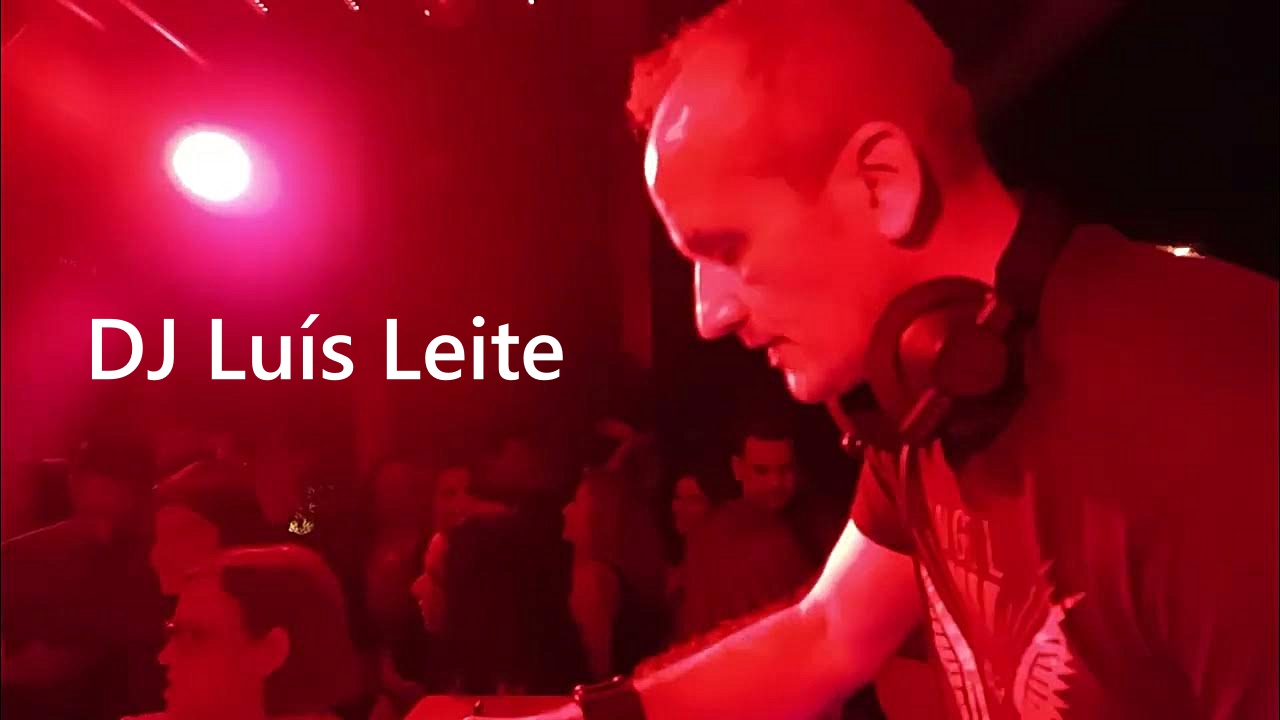
To talk about Luís Leite is, inevitably, to open a history book on the genesis of clubbing culture in Portugal—a narrative that merges with the heartbeat of Lisbon’s nightlife in the early 90s. More than a mere selector of tracks, he became the sonic architect for a generation that discovered freedom on the dance floor, quickly becoming the face of the mythical Alcântara-Mar. It was there, within walls that breathed avant-garde, that the DJ established his most iconic residency between 1991 and 1999, shaping the ears of thousands of Portuguese clubbers with a musical curation that refused easy compromises.
His style, marked by a refined technique in mixing vinyl and an almost telepathic ability to read the crowd, brought the Progressive House and Techno that were simmering in European metropolises to the capital, raising the bar for what was expected of a night out. Luís Leite’s influence wasn’t confined to the smoke and strobe lights of Alcântara; it spread across the country through his famous CD compilations, such as the “The House of Rhythm” series, which became authentic cult objects. In a pre-streaming era, these recordings were the only passport for those living outside Lisbon to feel the vibrant energy of the nights he commanded.
Often working alongside figures like DJ Vibe, Luís Leite shared the spotlight in consolidating Kaos Records, the label that put Portugal on the world map of electronic music. His journey is also defined by immense geographical diversity, having played in iconic booths from north to south, such as Rock’s and Plateau, demonstrating a versatility that allowed him to transition between spiritual Deep House and denser, more hypnotic sounds. For Luís, the act of being a DJ was never about ego or visual spectacle, but rather about building a deep emotional journey that united strangers through the same rhythm.
His famous Sunday morning sessions became legendary, often extending into after-hours that defied time and the physical endurance of the most dedicated clubbers. He possessed the rare ability to educate the public while making them dance, introducing complex tracks that, in his hands, sounded like universal anthems. This dedication to sonic quality made him one of the pillars of the professionalization of the DJ career on national soil, proving that this art required as much study as it did passion.
The transition to the digital era was made with the same elegance with which he handled his 12-inch records, remaining relevant without ever losing his identity as a purist. Even as decades passed and the industry underwent drastic changes, he remains a constant and respected presence, adapting to new technologies without sacrificing the analog soul that saw him rise. Luís Leite is not just a survivor of a bygone era, but a master who continues to teach how a story is told through music.
Nowadays, it is common to see him headlining major “revivalist” events, where he proves that quality music is immune to the passage of time. In these moments, his curation functions as a living history lesson, attracting both the veterans who lived through the 90s and the young people seeking to understand the roots of the movement. The respect he commands among his peers is unanimous, and he is frequently cited as the primary inspiration for the new wave of producers and DJs who dominate the festival circuit today.
Outside the DJ booth, Luís Leite maintains a notably discreet and humble posture, always preferring the focus to remain on his art rather than his private life. This attitude has earned him an aura of mysticism and integrity that is rare in a world increasingly focused on image and social media. He chose the path of consistency, focusing on what truly matters: the vibration coming out of the speakers and the human connection created on the dance floor.
Today, looking back at this pioneer’s career is to understand that electronic music in Portugal would not be the same without his audacity to risk new rhythms in a still-virgin market. He was one of those responsible for transforming the night into a space for cultural and artistic expression, stripping away the stigma of mere fleeting entertainment. His legacy is present in every beat of House music heard in national clubs, serving as an inevitable reference for any urban culture enthusiast.
Luís Leite remains, therefore, the guardian of a collective memory and a symbol of artistic resilience. He didn’t just play records; he helped define the soundtrack of a transformative decade and continues to be a beacon of quality in the current musical panorama. As long as there is a dance floor in Portugal that values technique, taste, and history, the name Luís Leite will continue to be spoken with the reverence due to a true master.