
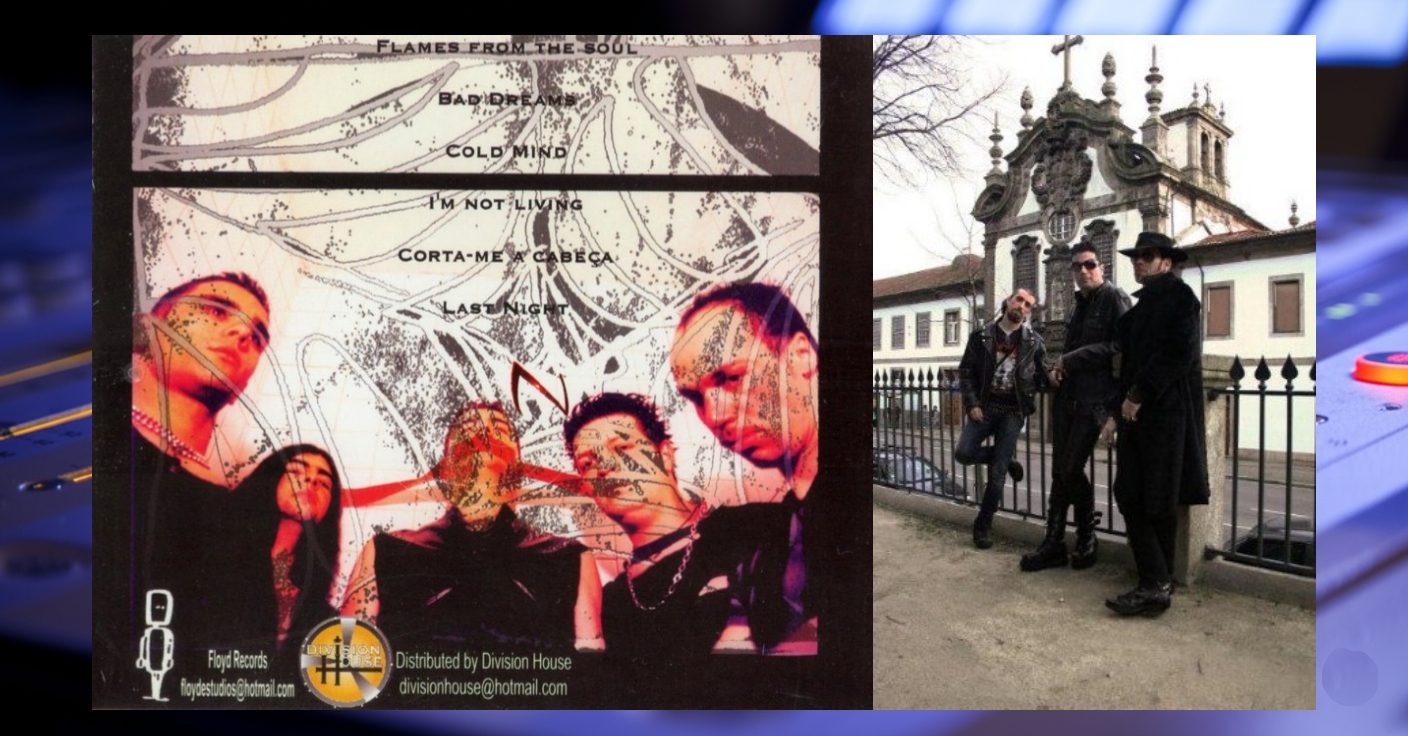
If there are names that blend into the very mist of Portuguese alternative rock history, Noctivagus is undoubtedly one of them. Formed in Setúbal back in 1993, the band didn’t just play music; they created a sanctuary for nihilism, paganism, and the melancholic beauty of death.
The name, derived from the Latin for “He who walks in the night,” couldn’t be more fitting. For decades, Noctivagus has been the guardian of a sound rooted in Post-Punk and pure Gothic Rock, evoking influences from giants like Joy Division, Christian Death, and Siouxsie & the Banshees.
A Journey of Shadows and Sound
The band’s story began with Lino Átila (also known as Lino Cunha), the charismatic vocalist and the only member present in every incarnation of the group. From their early EPs, such as Almas Ocultas (1995) and Imenso (1998), it was clear the group was unafraid to explore the depths of the human psyche.
International recognition came early. In 2003, the album After the Curse broke borders, and in 2007, the band took their sonic ritual to Lithuania for the “When Spirits Awake” festival, proving that Portuguese darkness had a universal appeal.
Legacy and an Unexpected Return
While many thought the silence following their last major tour (2010/2011) signaled the end, Noctivagus proved that what is truly immortal never really dies.
Recently, in February 2024, the band surprised fans with the release of “Okulto” via Grey Clover Records. This isn’t just another record; it is an archaeological treasure. The album gathers rare cassette recordings from the 90s, polished and treated to preserve the raw energy and mystique of those formative years. It is a time capsule that reminds us why they are considered pioneers of Deathrock in Portugal.
Essential Discography for Your Playlist
If you are just now discovering the “B-side” of Portuguese rock, here are the milestones you need to hear:
- After the Curse (2003): The album that defined the group’s identity.
- Ecos da Noite (2011): A deeper exploration of their dark roots.
- Okulto (2024): To experience the raw energy of the 90s.
- Transmission (2005): A tribute single to Joy Division that is mandatory listening for any post-punk fan.
Why Listen to Noctivagus Today?
In a world that is increasingly plastic and immediate, the music of Noctivagus offers something rare: authenticity. Their lyrics, steeped in poetry about the supernatural and existentialism, act as a mirror for those unafraid to look inward.
The Setúbal band isn’t just a footnote in the encyclopedia of Portuguese rock; they are a living entity that continues to prove that as long as there is night, there will be those who walk within it.
Did you know? The music video for “Pilgrim Dimension” (2011) is considered the visual record of the band’s last major phase before their hiatus, symbolizing the end of an era that now—with their new releases—seems to be catching its second wind.
What do you think of this journey through the darker side of Portuguese rock? Were you already familiar with Lino Átila and company, or will “Okulto” be your gateway into their world?