
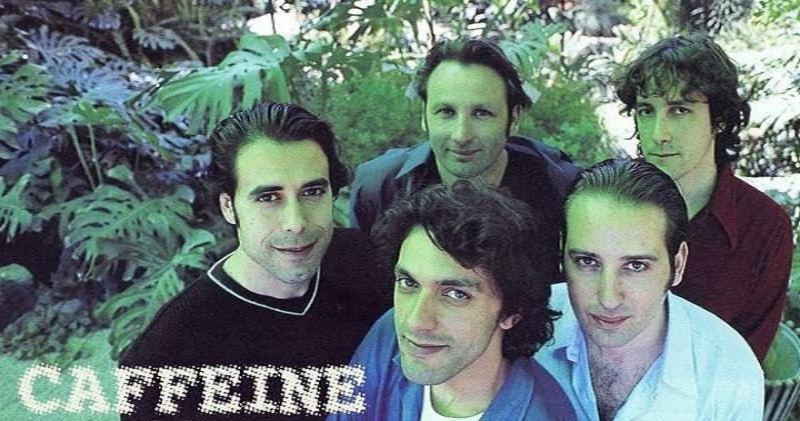
In the heart of Figueira da Foz, during the mid-1990s, one of the most unique and melancholy soundscapes of Portuguese alternative rock began to take shape. Caffeine were not just another garage band; they were the vessel for Cláudio Mateus to explore an emotional density that the country had rarely experienced. Following the end of Gnose in 1996, Mateus gathered a group of musicians who shared his obsession with shadows and sonic cinema, drawing inspiration from figures such as Nick Cave, Tom Waits, and Leonard Cohen.
What began as a project to cover these very idols quickly transformed into a universe of original compositions, where dark folk and indie rock merged with rare elegance. The transition from external influences to an original identity was the first major step for the band, which found in its hometown—a coastal city with grey winters—the perfect backdrop for its sound. This environment was reflected in the slow cadence of the music, which eschewed the fast-paced pop of the era to focus on detail and atmosphere.
Recognition was not long in coming, but it arrived in an organic and respectful manner, winning over critics before reaching the general public. In 1998, the specialized press, led by publications such as Diário de Notícias, was already pointing to their first demos as the future of the national sound, highlighting the maturity of the songwriting. This period of affirmation allowed the band to step out of its comfort zone and begin occupying prestigious stages in Lisbon and Porto, where their restrained and intense stage presence began to garner a legion of loyal followers.
The absolute turning point and creative peak of the group occurred with the release of their self-titled album in 2001, released by a major label. It was a work of unusual ambition for the context of Portuguese independent music at the time. The songs crossed borders and reached the ears of the legendary producer Tony Cohen, a regular collaborator of Nick Cave and the Bad Seeds. Cohen, impressed by the quality of the material, agreed to mix and post-produce the record, giving it an international dimension and a sonic depth that few Portuguese albums possessed until then.
This seal of international quality served as a passport to experiences that were rarely within the reach of national alternative bands. The accumulated prestige allowed them to share lineups and open concerts for giants such as Iceland’s Sigur Rós and Nick Cave himself at the Aula Magna. These events were not merely opening slots, but rather validations that Caffeine played in an aesthetic league of their own, where music was treated as a piece of cinematic art, far removed from the more effusive or commercial rock that dominated the airwaves.
Caffeine’s music was made of complex textures, pianos that seemed suspended in time, and a voice—that of Cláudio Mateus—which carried the weight of a dusty, urban yearning. Songs like “Slippery Ride” became cult anthems, listened to in spaces where silence and attention were as important as the volume of the sound. The band managed to create a disconcerting intimacy with the listener, transforming each performance into a sort of melancholic ritual that left a lasting mark on those who witnessed them live.
However, maintaining an artistic structure of this complexity in a market like Portugal proved to be a constant and sometimes thankless challenge. The national musical ecosystem did not always know how to sustainably welcome such introverted and dense proposals, which made it difficult for the project to continue in the long term. Between 2004 and 2005, the band’s creative and logistical momentum began to slowly fade under the weight of the demands of an independent career in a country with few windows of opportunity for its specific genre.
There was no noisy separation, public arguments, or media conflicts to seal the group’s fate; the end was a reflection of the very nature of their music: a slow and almost poetic fading away. The natural wear and tear of nearly a decade on the road, coupled with the need for members to explore new artistic and personal paths, dictated the closure of this cycle in a quiet manner. The band decided to stop when they felt that the essentials had already been said and that their artistic integrity should be preserved above all else.
The final goodbye was recorded only in 2007 with the release of Last Shot, a posthumous album that served as a testament and final document for the fans. Cláudio Mateus moved forward with Electric Willow, keeping alive his essence as a songwriter focused on the pure song, but Caffeine remained stored in the collective memory as an unrepeatable phenomenon. Today, remembering the path of this group from Figueira is to celebrate a time when Portuguese rock allowed itself to be dark, sophisticated, and, above all, profoundly human in every note.