
The Awakening in Guimarães
It all began in the summer of 1994, in the city of Guimarães. What we now look back on as a fertile era for Portuguese independent music had, at the time, a solitary kickoff: Miguel “Aramis” Ribeiro. Driven by a clear vision, Miguel took on the role of a one-man band, handling all the instruments and the complex task of programming.
The Rise of an Anthem
It didn’t take long for Miguel’s energy to find its missing piece. Rui “Puto” Dias, who already had a musical background with projects like Bergen Belsen and Joana Dark, joined forces with the project. Soon after, the track “Tásquilhado” was born—named after an iconic bar in Guimarães frequented by the members. What started as a local inside joke quickly transformed into a hometown anthem.
The Genesis of the Name
Under the collective moniker Cio Soon, the group played with phonetics. Inspired by the English phrase “see you soon,” the name carried no grand philosophical weight. It was merely a playful pun—a casual nod that, ironically, would mark the beginning of a serious and ambitious journey into the national music scene.
Stepping Into the Limelight
In 1995, the second volume of the “Ritual Rock” compilation opened new doors for Cio Soon. The inclusion of “Tásquilhado” on the record brought unexpected radio airplay and glowing reviews in the press at the time. Their days of anonymity were coming to an end.
Expanding the Family
Growth brought a need for more sonic muscle. Ricardo “Formiga,” a veteran of projects such as Ritual Profano and Barca do Inferno, stepped in on bass, while Feliciano took over programming duties. The band was gaining mass and was finally ready to conquer the stage.
Exploding Live
The year 1996 was defined by live performances, most notably at the “Noites Ritual Rock” and the celebrated “Garagem” festival. Their participation in the festival’s self-titled compilation with the track “Eu Não!” cemented the group’s signature sound—an industrial fusion of guitars and electronics, sitting somewhere between the fury of The Prodigy and the irreverence of Carter, The Unstoppable Sex Machine.
Sculpting the Sound
For live shows, Ana Ribeiro provided occasional support with programming, but the group felt they needed more stability. The arrival of Marco Oliveira to reinforce this section proved to be a decisive step. Their sonic identity was being sculpted with ultimate precision.
The Turning Point
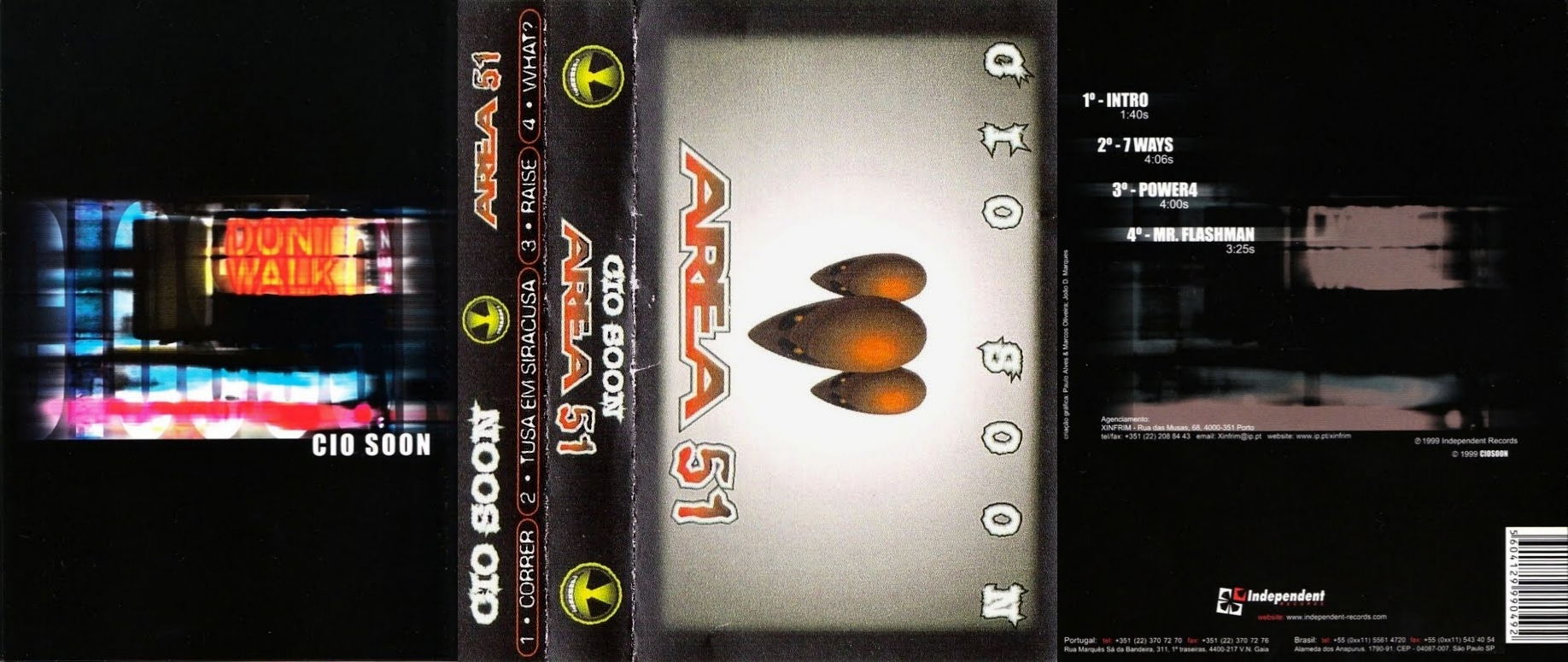
1997 was arguably the most pivotal year in the band’s progression. With appearances on various compilations, such as “Raise” and “Noise Sessions,” alongside a landmark performance at the mythical Paredes de Coura festival, Cio Soon were everywhere. In July, they released their first official demo, the cassette tape “Area 51.”
Between Humor and Darkness
Cio Soon’s sound had evolved. It grew denser, darker, and more serious, but never lost its healthy dose of humor. There was a strange symbiosis at play: echoes of Nine Inch Nails blended with the eccentricity of Tones On Tail and, of course, a touch of madness—such as on the track “Tusa em Siracusa,” which sounded like Pedro Abrunhosa on acid.
Gaining Ground
This demo served as a luxury passport to more ambitious gigs. By 1998, the band was sharing the stage with Senser at the Mira Festival, confirming the sonic affinities that linked them to a more demanding, international alternative scene.
Lineup Shifts and the “Don’t Walk” EP
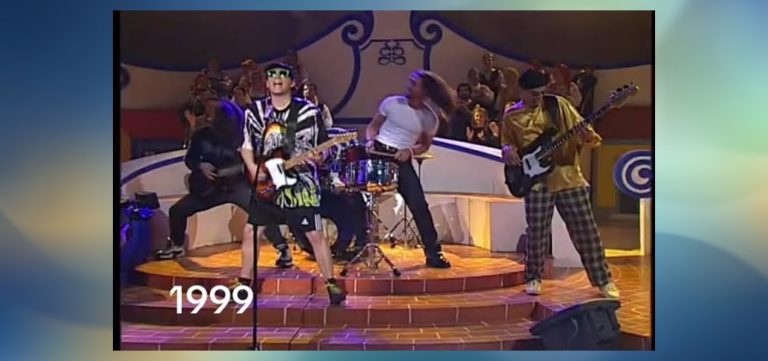
As the decade drew to a close, the lineup shifted. Rui and Feliciano moved on to other ventures, leaving Miguel to take over guitar duties in addition to vocals, while Paulo Alves joined to handle programming and samplers. Packed with this fresh energy, they recorded the “Don’t Walk” EP in 1999—a more experimental and deconstructed piece of work.
The End of a Chapter
Despite the ambitious stride, Cio Soon’s destiny was already written. Around the year 2000, the project closed its final chapter. However, in music, endings are often just the beginning of new explorations. Formiga immersed himself in his own project, The Ant, while Miguel looked toward the horizon with his parallel venture: Kung Fu Trunx.
The Birth of Kung Fu Trunx
Started back in 1997, Kung Fu Trunx reflected Miguel’s more danceable, electronic side. The name was a dual tribute to martial arts and Trunx, his favorite character from the anime series Dragon Ball. In this project, Miguel controlled every element—from vocals to samplers—creating a demo that would win the Demo Prize from Deixe de Ser Duro de Ouvido magazine.
Atmospheric Dance Beats
Drawing inspiration from giants like Tricky, Massive Attack, and Kraftwerk, the sound of Kung Fu Trunx was a highly personal interpretation of electronic music. Although professional commitments and geographical distance slowed down their momentum, the project continued to expand by bringing in new collaborators, including Joana, Ana Luísa, and Carlos “Pastel.”
The Ongoing Legacy
December 2008 brought a truly singular moment: performing a live soundtrack for James Whale’s classic film Frankenstein. Utilizing an expanded lineup that included Bruno Ferreira and Pedro Paredes, Kung Fu Trunx proved that despite delays and setbacks, Miguel Ribeiro’s creative spark never faded. The long-promised full-length album remains a quiet vow, keeping hope alive for everyone who follows this remarkable journey.

Cio Soon foi uma banda portuguesa de rock e punk rock alternativo formada no verão de 1994, na cidade de Guimarães, pelo músico Miguel “Aramis” Ribeiro. O projeto, cujo som misturava influências eletrónicas e industriais à la Nine Inch Nails com uma boa dose de humor, encerrou as suas atividades por volta do ano 2000