Portuguese music in the 1990s was profoundly marked by a massive wave of pop-rock characterized by a strong sense of humor, satire, and festivity. Alongside irreverent projects that dominated sales charts and the summer concert circuit—such as Ena Pá 2000, Mercuriocromos, and Fúria do Açúcar—one of the most unique and memorable projects of the national scene emerged within this cheerful wave: Os Porquinhos Da Ilda.
The group’s genesis dates back to early 1995, when the concept began to take shape in the mind of its creator. Led by Miguel Castro—who took on the roles of lead vocalist, composer, lyricist, and intellectual mentor—the project was born from an explicit desire to create a contagious sound free of formal prejudices, blending dynamic arrangements with deeply ironic writing that chronicled everyday Portuguese life.
The very name “Os Porquinhos Da Ilda” (Ilda’s Little Pigs) perfectly captured the group’s conceptual identity and unpretentious aesthetic. Far from wanting to establish themselves as a conventional rock band with solemn ambitions, they opted for a popular and comical wordplay that instantly plunged the listener into an atmosphere of parody, complicity, and informal celebration.
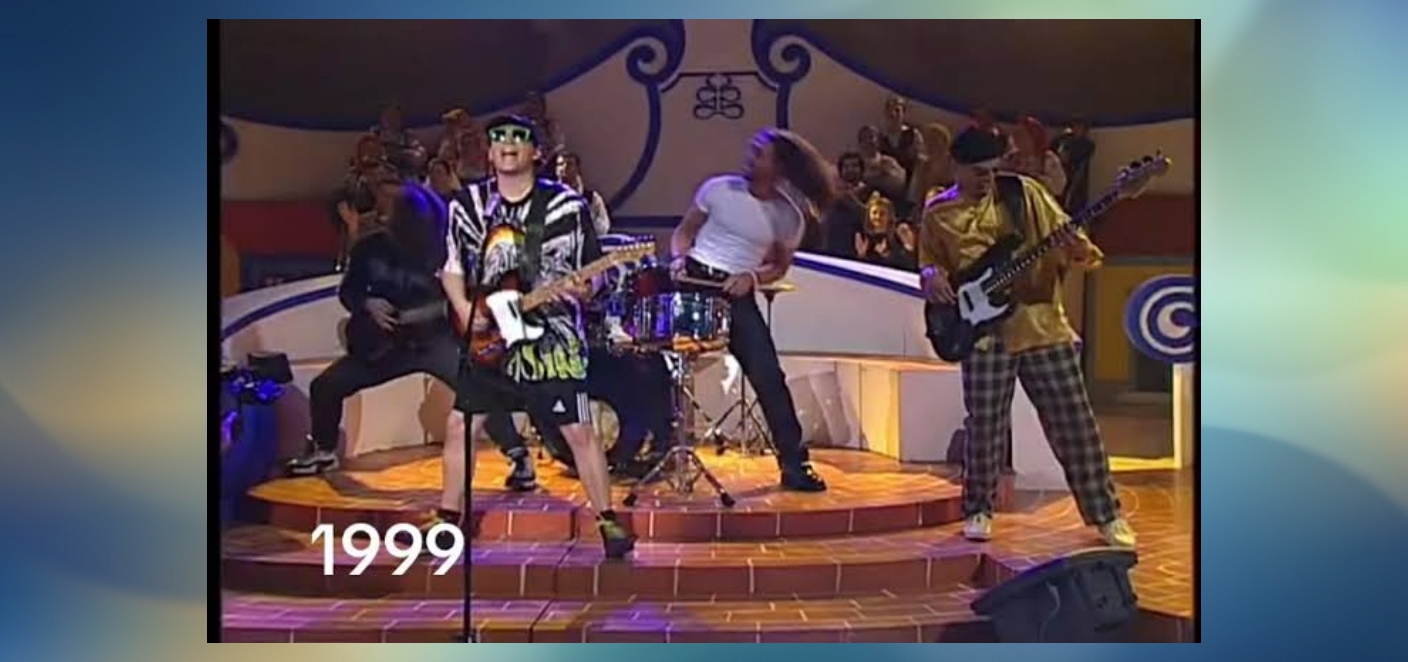
From their very first public performances, the band stood out for the sheer energy they brought to the stage and the fast-paced nature of their touring routes. Audiences quickly warmed to the group’s performance format, where catchy songs were paired with theatricality, humorous costumes, moments of improvisation, and constant direct interaction with the crowd.
The greatest asset of Os Porquinhos Da Ilda lay in their repertoire of highly catchy and rhythm-driven tracks, which quickly transformed into authentic earworms. The pinnacle of their musical career was undoubtedly the resounding success of the song “Canguru,” a track with an infectious chorus that became an absolute must-have anthem at academic parties, festivals, and concerts across the country.
Alongside this massive hit, other tracks gained a steady, enduring presence on national radio rotation and in the collective memory of their fans. Songs like “Caracol,” “Ska Já Fosse Verão,” and the humorous and controversial “Marijuana No Meu Quintal” showcased the group’s ability to fuse styles such as ska, pop-rock, and tropical rhythms with comical, surreal stories loaded with double entendres.
The group’s catalog also featured other standout tracks like “Nunca Mais Eu Chego ao Texas,” “A Melancia da Sandra Maria,” and “Mexe-Mexe.” These compositions reinforced the band’s popularity across a diverse audience, securing them regular appearances on high-ratings prime-time television shows and invitations to the country’s main festivals and regional fairs.
Structurally, Os Porquinhos Da Ilda operated as a project sharply centered on Miguel Castro’s creative vision. As the artistic engine and author of almost the entire repertoire, the band performed live and in the studio with a flexible lineup, integrating support musicians and guest instrumentalists who brought technical solidity to their live shows.
Over their years of activity, the live backing lineup naturally underwent several rotations. As a band with a blistering schedule focused on summer tours, the flux of musicians proved to be an organic constant, while the creative core and the leadership of the frontman remained entirely unchanged.
With the transition into the 2000s, the ecosystem of the Portuguese music industry began undergoing profound sociocultural transformations. The height of popularity that had sustained comic rock and parody bands throughout the 1990s gradually began giving way to new aesthetic currents, such as electronic pop, national hip-hop, and alternative rock.
Parallel to this market shift, Miguel Castro himself began exploring new professional and creative horizons in the artistic field. Around 2006, the vocalist took his first solo steps with the release of the single “Teu Nome É Mafalda,” marking the beginning of a transition toward more personal and mature musical languages.
The end of Os Porquinhos Da Ilda’s activity did not result from an internal conflict or a dramatic breakup announcement, but rather from a natural process of deceleration. After a decade marked by hundreds of performances and successful record releases, the band progressively reduced its output of new originals and the frequency of its national tours.
This slowdown was directly tied to the natural wear and tear of the parody format and the evolution of Miguel Castro’s professional career. The project’s creator began focusing intensely on other facets of the audiovisual sector and performing arts, standing out as a screenwriter for television and theater, alongside a consolidated career in voice dubbing.
As a golden finale to this journey, the band released the compilation album “O Grande Veribéstofe” in 2008—its title playfully subverting the phonetics of the English expression “Best Of.” Gathering around two dozen of their greatest hits, the album and the accompanying farewell tour between 2008 and 2009 served to celebrate the group’s legacy, which endures to this day as a nostalgic and entertaining benchmark of 1990s Portuguese pop-rock.