
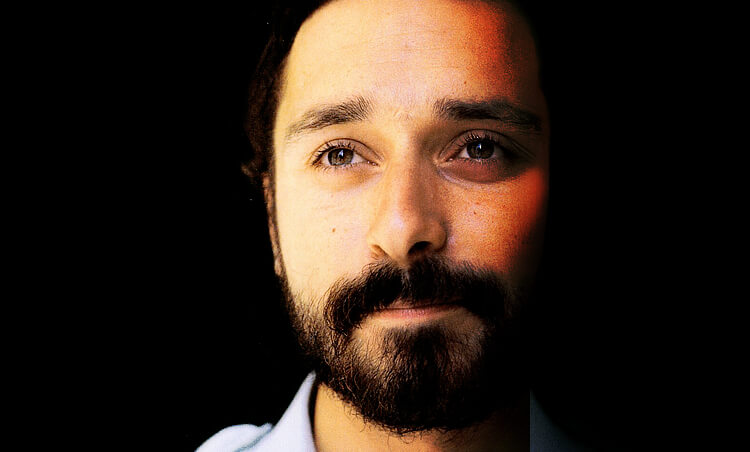
Carlos Paião was born on November 1, 1957, in Coimbra, beginning a unique life journey that would profoundly mark the culture and history of Portuguese music. The son of parents born in Ílhavo, he spent his early childhood in that coastal town before moving with his family to the Cascais area, where he grew up surrounded by creative and cultural stimuli.
From a very early age, he showed an extraordinary inclination for writing and composition, accumulating hundreds of songs in his youth. In 1978, when he already had more than 200 songs written, he took an important step by winning the Illiabum Club Song Festival with the song “Canto de Guerra”, cementing his precocious talent.
True professional recognition began to take shape in 1979, the year he signed a recording contract with Valentim de Carvalho, propelling a path that would quickly gain national dimensions. Alongside music, he pursued higher academic studies, graduating in Medicine from the University of Lisbon in 1983, a profession he practiced but would eventually intertwine with his artistic side before ultimately choosing the stage.
The defining moment of popular acclaim occurred in 1981, when he won the Festival RTP da Canção with the unmistakable song “Playback”, a brilliant and intelligent satire on the use of pre-recorded music in television shows and performances. This success led him to represent Portugal at the Eurovision Song Contest held in Dublin, where, despite a penultimate place finish, he captured a permanent spot in the national collective memory.
Also in 1981, he released the striking track “Pó de Arroz”, followed by smash hits like “Marcha do Pião das Nicas”, “Cinderela”, and the iconic “Vinho do Porto (Vinho de Portugal)”, performed in a duet with Cândida Branca Flor at the 1983 Festival RTP da Canção. His unique style blended light song, pop, and fine satire, traits clearly evident on his debut studio album, “Algarismos”, released in 1982.
Besides being a performer, Carlos Paião proved to be an extraordinarily versatile composer and lyricist, writing over 300 songs throughout a career spanning about a decade. He created memorable tracks for other great names in Portuguese culture, notably collaborations with Amália Rodrigues—for whom he composed “O Senhor Extraterrestre” and “Nosso Povo”—and with Herman José, including comedy hits like “A Canção do Beijinho”, “Bámos Lá Cambada”, and the repertoire of the celebrated character Serafim Saudade.
Tragedy struck the national artistic scene on August 26, 1988, as the artist was driving to a concert for the festival of São Ginésio, in Penalva do Castelo. A violent car crash on the old EN1, near Rio Maior, prematurely took his life at the age of 30, leaving the country in a state of shock and mourning for the loss of one of its generation’s greatest talents.
At the time of his death, he was preparing the release of “Intervalo”, his second studio album, which was eventually released posthumously in September 1988. The record symbolized the continuation of a path that, although abruptly interrupted, left solid foundations and an inestimable artistic heritage for modern music in Portugal.
In the following decades, Carlos Paião’s work was incessantly recovered, celebrated, and reissued through multiple tribute projects that attest to his timelessness. In 2008, the album “Tributo a Carlos Paião” brought together artists from universes as distinct as Rui Veloso, Sam The Kid, Mesa, and Tiago Bettencourt to reinterpret his greatest classics.
Ten years later, in 2018, the project “Paião”, coordinated by João Pedro Coimbra and Nuno Figueiredo, revisited the author’s vast repertoire to give it new aesthetic arrangements. Institutional recognition was also clearly demonstrated, culminating in 2020 with his posthumous decoration as Commander of the Order of Prince Henry and various distinctions bestowed by the municipality of Ílhavo.
The musician’s indelible influence crossed recording boundaries and reached the big screen in 2026 with the release of the film “Playback – Um Filme Sobre Carlos Paião”. Directed by Sérgio Graciano and starring Rafael Ferreira, the film portrays his trajectory from his days as a medical student to artistic affirmation, featuring contributions from Zaida Cardoso, the musician’s widow.
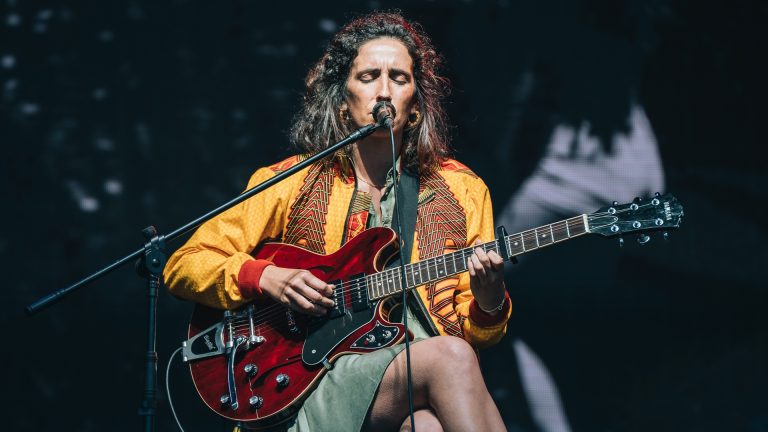
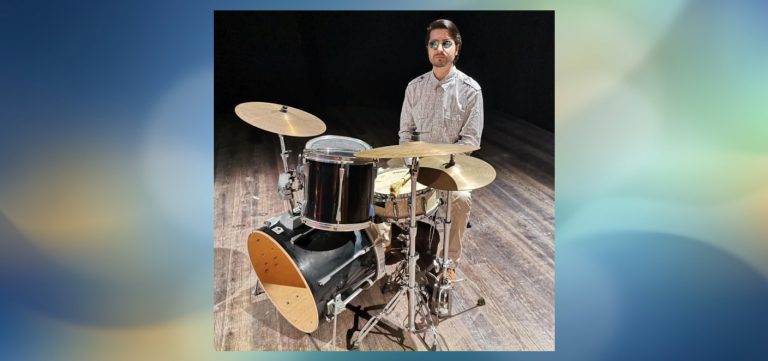
The feature film’s musical direction was handled by Paulo Furtado (The Legendary Tigerman), who recreated various compositions and recovered an unreleased track, “Lisboa Lisboa”. This renewed momentum also gained live expression through the show “Playback – Paião por Tigerman”, presented at the 2026 NOS Alive festival, featuring Rafael Ferreira and Sara Badalo on vocals, accompanied by Paulo Furtado, Mike Ghost, and João Cabrita.
The city of Ílhavo, where he spent part of his childhood and where his parents were born, indelibly perpetuated his memory by erecting a sculpture by artist Albano Martins on Calçada Carlos Paião, integrated into Jardim Henriqueta Maia. The monument, marked by the inscription “#emPlayBack”, serves as a meeting point and place of pilgrimage for fans of all ages who continue to visit the site.
Carlos Paião’s brief decade of active artistic activity was enough to build one of the richest, most unique, and multi-faceted collections in the history of Portuguese light music. His writing, deeply rooted in the mordant observation of daily life, used irony and wordplay as tools of sharp critical acuity without ever neglecting melodic effectiveness and popular accessibility.
Nearly four decades after his physical passing, Carlos Paião’s creative energy remains intact and transversal to new generations of listeners. Between reissues, cinematic tributes, and live revisions, the legacy of a doctor who chose to heal the soul through song continues to echo with vigor, proving that his creative genius never knew a full stop.

Carlos Paião deixou uma marca indelével na música portuguesa ao escrever mais de 300 canções que misturavam com mestria pop, sátira e uma observação acutilante do quotidiano. Tragicamente interrompido aos 30 anos, o seu legado criativo único continua a inspirar novas gerações através de clássicos intemporais, homenagens e obras biográficas.
Um fenômeno da música portuguesa, marcou gerações.