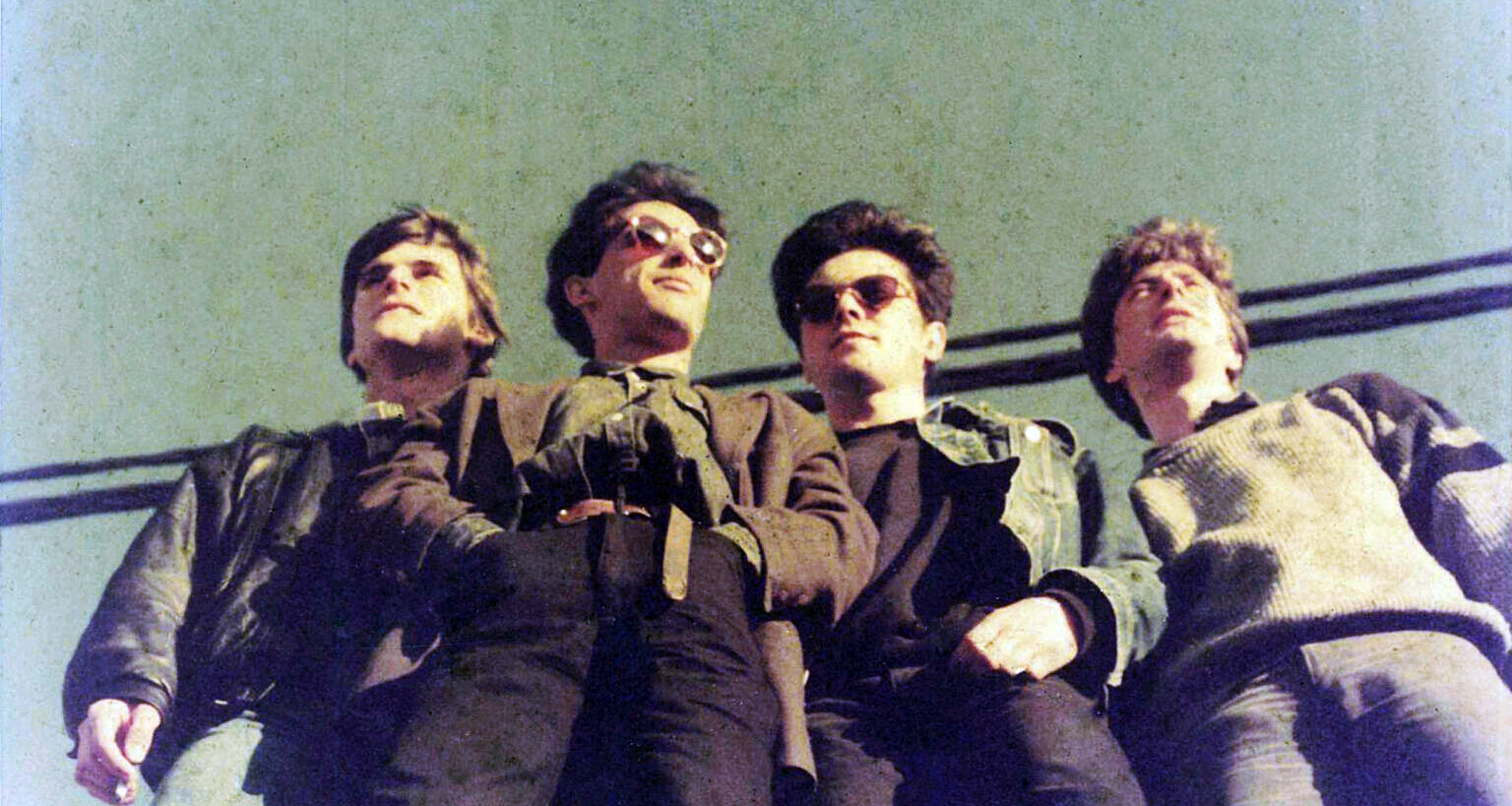
The Portuguese music scene witnessed the emergence of a band with a strong name and a distinct sound in 1987: General Inverno. Hailing from Ermesinde, this project was born with a very specific and ambitious goal in mind: to shine on the stage of the 1st Luso-Galaic Live Rock Festival.
Their participation in this event, held at the emblematic Pub Luís Armastrondo in Porto, was not in vain. In fact, the group would go on to win the 1988 edition of the festival, an achievement that, for many, validated their quality and emerging potential in the national rock landscape.
To boost this goal and showcase their worth, they recorded a demo that became known by the title “Sotabalda.” This recording served as a powerful calling card, helping to define the band’s journey and disseminate their musical identity.
One of the great assets of this formation lay in the quality of the lyrics. Nuno du Ebebçk, the stage name of Carlos Bessa, a poet by trade, was exclusively responsible for the writing. The subtlety, intelligence, and richness of his texts were notable, raising the project’s lyrical standard.
The interpretation of these songs was handled by Jorge Seabra, an excellent vocalist and a charismatic front man. His ability to project his voice allowed every word to be perfectly audible and understood, syllable by syllable, which, combined with the strength of the lyrics, created a unique impact.
Tracks like “SuperSousa,” “Sal, Ar e os…” (“Salt, Air and the…”), “Topas” (“Do You Fancy It”), and “Até Porque” (“Even Because”) are clear examples of the intelligent, ironic, and humorous style the band cultivated. These songs steered clear of the superficiality that characterized many other groups of the time who chose to sing in Portuguese.
The core of the band consisted of Alcino Duarte on drums and Jorge Seabra on vocals and harmonica. Both brought with them the previous experience of Peso Bruto, an original rock-blues group that, although it had a brief existence between 1980 and 1981, had already performed dozens of gigs in the North region.
The initial General Inverno lineup also included Nuno Rocha, Paulo Andrade, and Pedro Beck. Interestingly, these members were all bass and guitar students of Orlando Mesquita, founder of the King Fisher’s Band (O Bando do Rei Pescador), which attests to the background of musicians with some formal training.
The “Sotabalda” cassette fulfilled its purpose. Although it was only a demo recording, it was effectively used to book live concerts and to be sent to independent radio stations, which quickly began requesting and broadcasting the group’s music.
The band’s impact was noticeable. As early as January 1988, General Inverno had the opportunity to perform live on the Antena 1 program “Ao Vivo” (“Live”), broadcasting three of their songs to the entire world. At the time, this was a major challenge and a sign of recognition for an underground group.
Despite their success, the band’s journey naturally concluded in 1989. The decisive moment was their refusal of an invitation to record an album for the Valentim de Carvalho label. The reasons stemmed from the incompatibility between the demands of the personal and professional lives of its members.
As Jorge Seabra recalled, the main objective was accomplished, and the experience left the gratification of having given memorable live concerts. Even though the official end had arrived, the flame did not immediately go out, with a few more performances and the composition of new songs, such as “Cinema S” and “Sushi Sada,” recorded up until mid-1992, bringing the band’s total number of composed tracks to 19.
Key Highlights
- The Band Won the 1st Luso-Galaic Live Rock Festival in 1988: This was the main goal of their formation and the only festival they participated in, marking the peak of their brief career.
- High-Quality and Intelligent Lyrics: The lyricism of Nuno du Ebebçk was the band’s greatest asset, with subtle, humorous, and ironic texts that stood out in the landscape of Portuguese-language rock.
- Refusal of a Contract with Valentim de Carvalho: The group chose to end the project in 1989, rejecting the opportunity to record an album due to the incompatibility between the personal and professional lives of its members.
In May 2022, a compilation of the material recorded by the band between 1987 and 1989 was released on CD for the first time, bringing together tracks from the demos, rehearsals, and some live recordings. This limited edition marked the band’s 35th anniversary, inaugurating the catalog of the then newly created label, Pós-80’s.