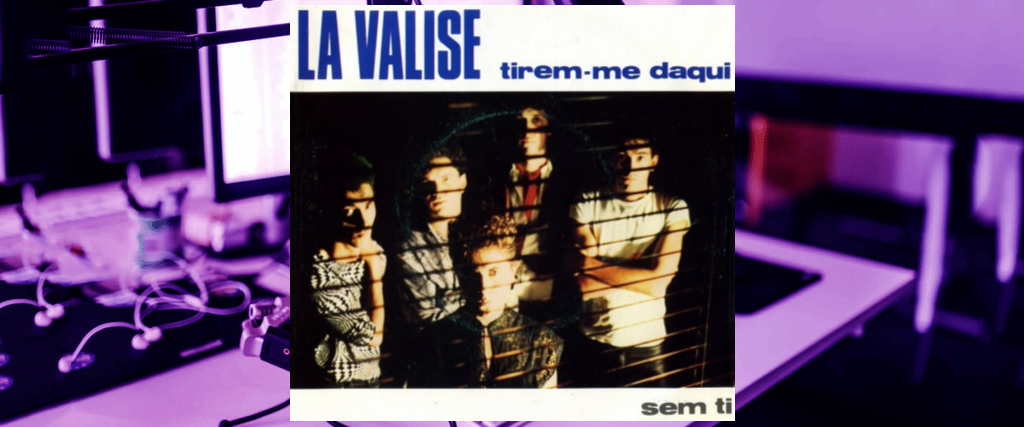
Born in 1986 in the vibrant Lisbon neighborhood of Olivais, La Valise emerged during a time of great effervescence for Portuguese rock. The group brought with them the valuable experience of its members: Paulo Rosado on bass, Luís Oliveira Dias on guitar, Fernando Martins on keys, Jorge Martins on drums, and the striking vocals of Dora Gomes. Together, they shared a common desire to leave their mark on the capital’s music scene, fueled by the collective spirit typical of 1980s garage bands.
The quintet’s talent and musical maturity quickly caught the attention of the industry. They were signed by RM Discos, a record label closely linked to Dansa do Som and, ultimately, to Lisbon’s mythical rock temple, the Rock Rendez Vous. For the production of their debut single, “Tirem-me Daqui” (Get Me Out of Here), the band relied on the experienced hand of the legendary Manuel Cardoso—a pivotal figure who shaped the project’s sound and validated the potential of these young musicians in the studio.
However, the recorded track revealed a classic artistic dilemma. Although the record deliberately adopted a more pop-oriented sound, anyone watching them onstage encountered a completely different reality. Live, La Valise unleashed a contagious, fast-paced energy, delivering a muscular, vibrant rock made for dancing. This duality showcased the true pulse of a band that lived for rock, yet agreed to soften its edges inside the recording booth.
This strategy, which clearly pointed to commercial concessions made to reach the airwaves, ultimately proved to be a misstep. By publicly defining themselves as a rock band with a pop sound on record, La Valise walked a risky tightrope. The attempt to balance two distinct worlds created an unfortunate destiny, leaving the group in a creative limbo that failed to please either the rock purists or the mainstream pop fans.
Like so many projects of their generation, La Valise was a fleeting comet, leaving behind just a single vinyl as a testament to their existence. Despite their premature end, the seeds of that union bore new fruit: keyboardist Fernando Martins, for instance, would carry the experience gathered in Olivais into the future success of Ritual Tejo. The band’s history remains a human and honest portrait of the choices, compromises, and sheer passion that drive music.