Strangely, at the turn of this century, a wave of musical projects emerged in Portugal that completely broke away from the traditional lineages usually followed by national bands. With Os Loosers serving as the clear spearhead of this movement, a host of daring acts—including Frango, CAVEIRA, Osso, Fish & Sheep, Lobster, Barcos, Phoebus, and One Might Add—embarked on an adventure where they recorded and self-released their own albums, booked their own shows, and designed their own record artwork and concert posters, all driven by a fiercely do-it-yourself ethos inherited from the punk movement. Sonically, the landscape was vast and uncompromising, blending elements of noise, experimental music, free-jazz, electronica, post-punk, krautrock, and the most delirious forms of psychedelia. This movement was not confined to Lisbon and its metropolitan area; it also found intense creative pockets in Northern Portugal, most notably in Santo Tirso with the project dAnCE DAMage.
Formed in late 2003, dAnCE DAMage brought together Pedro Magina (vocals, keyboards, and percussion), André Abel (guitar, keyboards, and drum machine), Filipe Martins (drums), and Tiago Ferreira (guitar and drum machine). The original lineup harbored a curious story of instrumental metamorphosis: Filipe Martins initially started out as the band’s bassist, but the group’s trajectory shifted dramatically during a casual moment in their daily routine.
During a break in a rehearsal session, Filipe sat at the drum kit and began playing in such an unusual, raw, and overpowering manner that the rest of the band was instantly captivated. The impact was so profound that the group made a drastic decision regarding their formal structure: they completely abandoned the electric bass to permanently install Filipe at the helm of the cymbals and snare, instantly shaping the rhythmic identity that would define them.
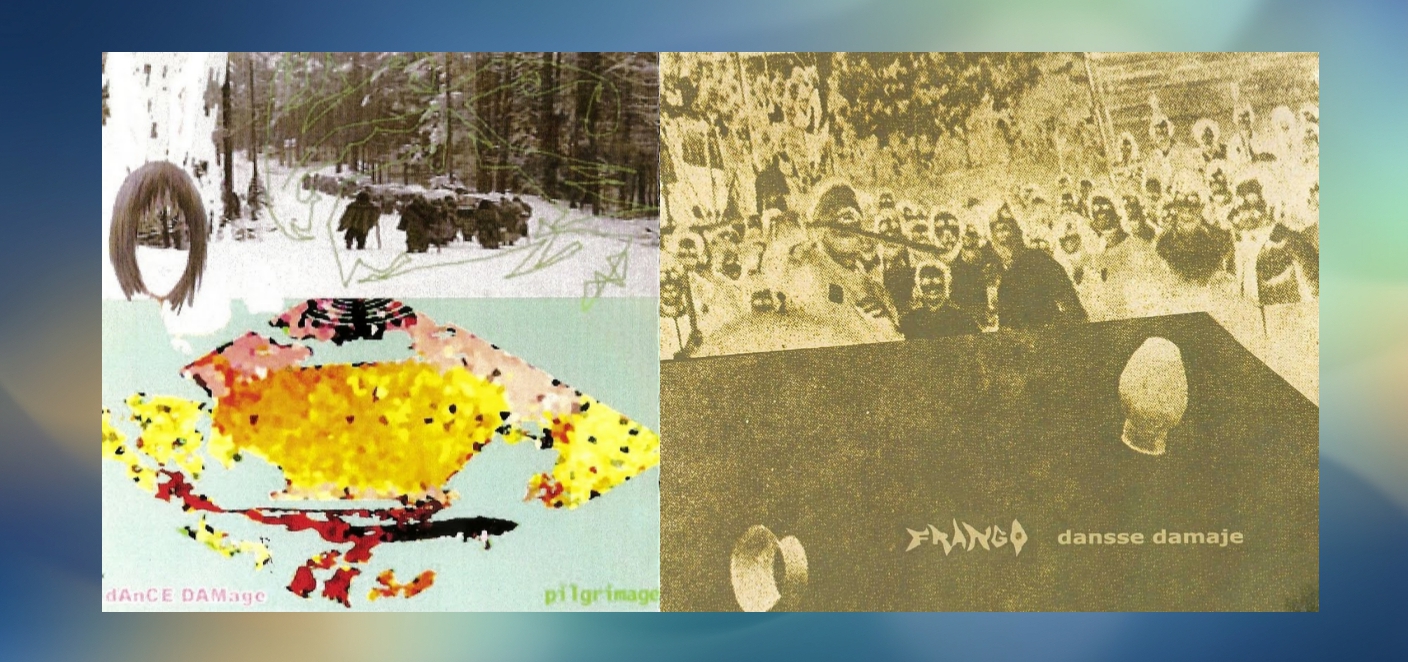
Their stage debut was not long in coming and took place in an unusual setting: on Christmas Eve in 2003, the collective performed live at the bar “Carpe Diem” in Santo Tirso. With the energy of that inaugural show still fresh, early 2004 brought their first home-recorded releases. The demo Don’t Pray in Public and the CD-single Pilgrimage immediately revealed their genetic blueprint, highlighting affinities with heavyweight influences such as Can, Liquid Liquid, Pere Ubu, The Fall, PIL, Einstürzende Neubauten, Neu!, Cabaret Voltaire, Captain Beefheart, and A Certain Ratio.
In these early releases, Pedro Magina’s vocal delivery stood out prominently, with an approach and projection akin to the frantic style of contemporary acts like America’s The Rapture or Porto’s X-Wife. However, the band’s dynamic faced its first logistical setback in mid-2004, when Tiago Ferreira suspended his participation to study abroad in Lithuania for a semester through the Erasmus Program.
Temporarily reduced to a trio, dAnCE DAMage turned this absence into an opportunity for aesthetic exploration, embracing an even rawer, noisier sound rooted in improvisation. Tiago Ferreira returned in January 2005, but the reunion proved short-lived: two months later, the guitarist left the group permanently. Rather than paralyzing the project, reconfiguring as a trio acted as a catalyst for a period of extraordinary productivity.
The year 2005 proved prolific both on stage and in their home studio, marking a phase where the band’s sound began to break free from its foundational influences to discover a more autonomous voice. This creative urgency translated into a succession of limited releases: they pressed 50 copies of Pressure Cabin Insignia (featuring three tracks), distributed by hand at their shows; in April, they released the CD-R Level Your Hearts At Dawn, featuring seven new tracks and a run of 100 copies; and in May, they recorded the CD-R single Excavator.
By 2006, occasionally adopting the spelling Dansse Damaje, the group joined forces with fellow travelers Frango to release the split CD-R FuentezFuentezFuentez, published by Searching Records. However, the relentless pace of experimentation and the constant pursuit of new sonic languages eventually brought the band to its saturation point. Later in 2006, dAnCE DAMage formally disbanded, entering a process of natural dissolution that ultimately served as a true Big Bang for the Portuguese independent music scene.
The implosion of the Santo Tirso collective did not mark the end of their artistic restlessness, but rather its multiplication across distinct fronts. André Abel went on to found the acclaimed Tropa Macaca (a cult project in the international experimental circuit) and later joined Pedro Magina to launch the synth-pop duo Aquaparque. Meanwhile, Tiago Ferreira continued building his musical path in projects such as Veados com Fome and Cavalheiro.
Today, dAnCE DAMage remain inactive, with no live activity or new releases under their name, standing strictly as a closed yet essential chapter in national music. Their brief, intense three-year journey is remembered as a living testament to the vitality of the Portuguese underground at the turn of the millennium—a time when the urgency to create superseded commercial conventions, and when a rehearsal in Santo Tirso could birth one of the most liberating movements in Portuguese experimental music.
Although dAnCE DAMage played an active role in the music scene, unfortunately no phonographic recordings or audio records of their work remain. The group’s history lives on through testimonies, photographs, and period articles, keeping their legacy alive in the memory of Portuguese music.