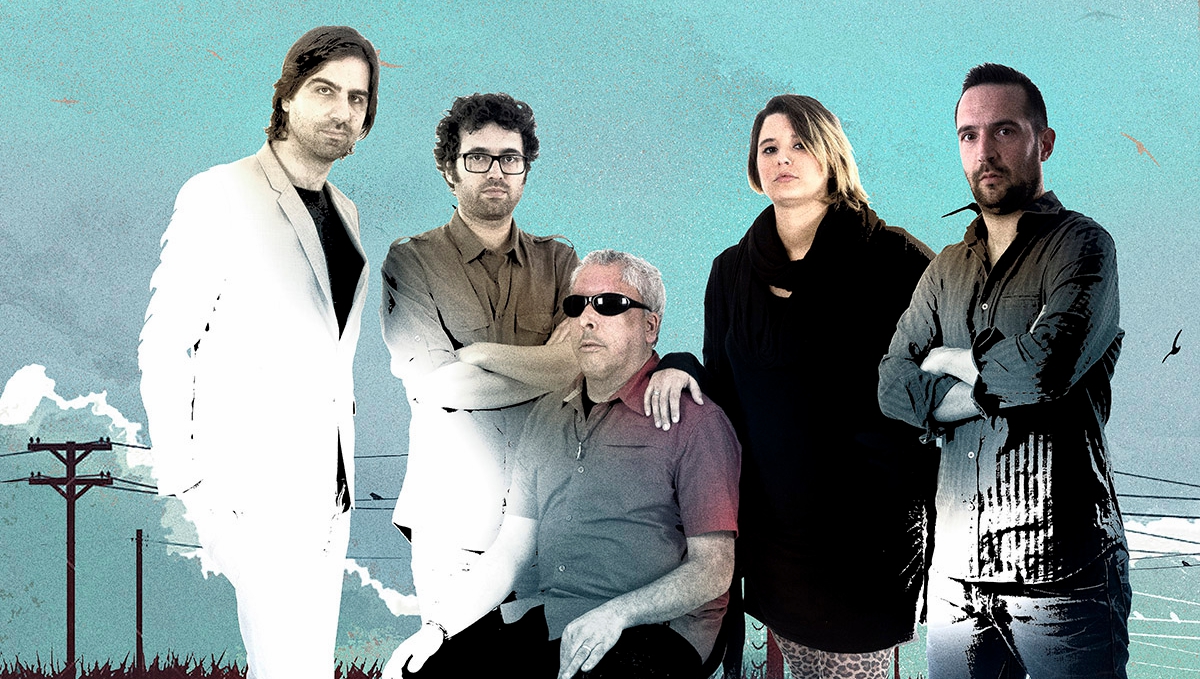
Meet Sebastião Manuel Duarte Antunes, the creative engine, composer, and voice behind Quadrilha. Since 1991, this Portuguese folk band has been crafting a unique sonic identity by blending the deep roots of traditional Portuguese music with the ethereal, driving energy of Celtic sounds. Today, Sebastião is joined by a talented lineup including Carlos Lopes on accordion, Emiliana Silva on violin, Hugo Ganhão on bass, and Mário João Santos on drums and percussion, all working together to keep this vibrant musical legacy alive.
The heart of Quadrilha’s mission has always been about connection. Sebastião, who previously led a project called the Peace Makers, transitioned into this group with a clear vision: to bridge the gap between ancient traditions and younger generations. He believes it is vital for young people to see themselves in this music, feeling a sense of ownership over a heritage that belongs to them just as much as it did to their ancestors.
Simplicity is the secret ingredient to their songwriting. The melodies are approachable and honest, mirroring the straightforward nature of the stories they tell. There is a descriptive quality to the lyrics where every verse feels like a carefully turned page in a larger narrative, drawing comparisons to the grounded, soulful literary style of the great Portuguese writer Miguel Torga.
At its core, their music is an anchor for the soul, brimming with the raw emotions of coastal and rural life. You can hear the echoes of fishermen’s prayers, ancient legends whispered by the fireplace, the playful charm of country girls, and the mystical pull of the moon. Whether they are performing a high-energy anthem or a quiet, tender ballad, the band honors a land that they believe still has so much to offer us.
The journey truly began in 1992 with their debut album, “Contos de Fragas e Pragas,” which turned Sebastião’s dream into a tangible reality. Three years later, “Até o Diabo Se Ria” proved the group was here to stay, but it was their third release, “Entre Luas,” that truly defined their signature sound. It was during this era that the specific blend of instruments finally matched the grand musical concept Sebastião had carried in his head for years.
The resulting sound is an intoxicating mix where the human voice, violin, concertina, and flutes dance over a powerful rhythmic foundation. Quadrilha has mastered the difficult art of marrying traditional melodies with a modern “pop” sensibility, making the old world feel incredibly current and accessible to a wide audience.
As the new millennium dawned, the band released “Quarto Crescente,” produced by Guilherme Inês. This record marked a bold evolution, introducing the hurdy-gurdy, bagpipes, and Celtic harp into the mix. With a refreshed lineup featuring musicians from jazz, classical, and even dance music backgrounds, the album showcased a newfound maturity born from years of relentless touring and studio experimentation.
By late 2003, “A Cor da Vontade” arrived as a more socially conscious and interventionist work. While it leaned into a solid acoustic base inspired by those ever-present Celtic roots, it felt more grounded and intentional. It was the sound of a band that knew exactly who they were and what they wanted to say to the world.
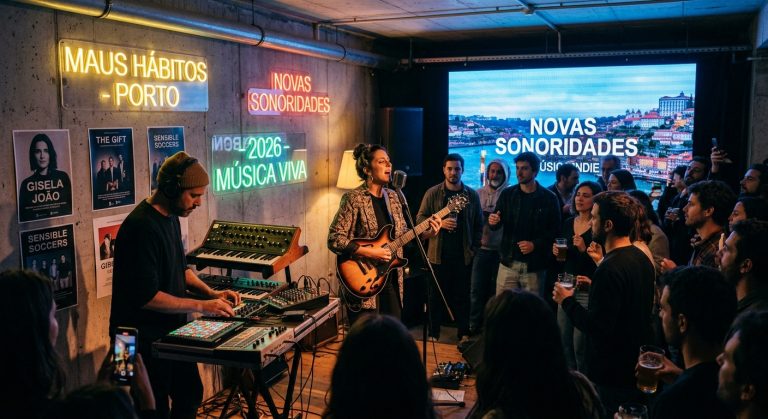
What makes their live performances so special is the sheer diversity of the musicians involved. With collaborators hailing from places like Scotland and the Netherlands, the stage becomes a melting pot of global influences. This infusion of jazz and classical expertise into the folk structure breathes an air of universality into every show, proving that local traditions can speak a global language.
In 2006, the band captured this live energy in the career-spanning album “Deixa Que Aconteça.” Recorded in Almada, it served as both a retrospective and a fresh start. It also saw Sebastião stepping into the role of producer, allowing him to bridge the gap between his creative impulses and the final sonic output, all while keeping a watchful eye on the issues facing our modern “Global Village.”
The exploration continued in 2009 with “Cá Dentro,” a project where Sebastião revisited the intersections of Celtic, Mediterranean, and European traditions. It was a scholarly yet passionate deep dive into the roots of knowledge, never losing sight of the Portuguese folk elements that first sparked his musical fire.
A few years later, the band returned with “Com um Abraço,” a title that perfectly captures the collaborative spirit of the record. Sebastião invited an eclectic group of international artists living in Portugal—like Tito Paris and Orlando Santos—to lend their voices to his compositions. This album also bore the heavy influence of a life-changing trip to Mali, where Sebastião discovered the surprising parallels between Tuareg rhythms and Portuguese tradition.
The most recent chapter, “Proibido Adivinhar,” continues to surprise listeners by flirting with electronic elements and urban textures. Produced by Luís Peixoto and featuring a magical appearance by Sahrawi singer Mariem Hassan, the album proves that after more than 25 years and countless festivals, Quadrilha isn’t just preserving history—they are actively writing its next exciting verse.