The Visual and Musical Universe of Qwentin
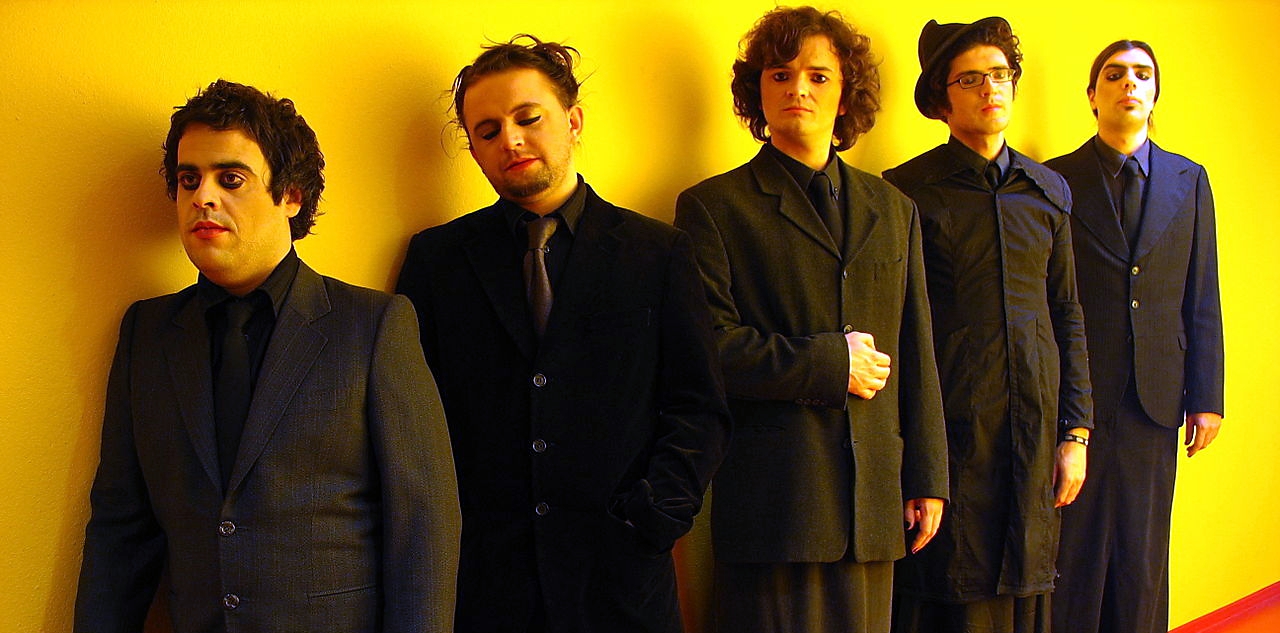
Founded in Cartaxo in 2003, the band Qwentin quickly stood out in the Portuguese rock scene, not just for their sound, but for a powerful visual identity. Composed of members of the “Qwentinsson” family—Drepopoulos, Gospodar, Morloch, Qweon, and Bárány—the band built a universe where music is inseparable from theatricality. On stage, the group utilizes makeup and a wardrobe that defies convention, featuring black suits and skirts that heighten the dramatic flair of their performances.
The group’s sound was born from the fusion of its members’ previous projects, blending influences ranging from punk to metal and psychedelia to progressive rock. Qwentin defines itself as an alternative rock project situated somewhere between science fiction and fantasy. This approach results in songs with cinematic structures designed to progress like a film, creating an immersive experience for the listener.
Embracing an openly European and global identity, the band rejects linguistic labels, utilizing a wide variety of languages in their lyrics. Their absolute debut took place at the Festival Tejo in 2003 at Casa Branca Beach, marking the start of a journey that prioritized originality above all else. From that moment on, it was clear that Qwentin did not intend to follow the commercial formulas prevalent at the time.
Their definitive breakthrough came in 2004 when they won the AZB002 competition, allowing them to return to Festival Tejo, this time on the New Talents Stage. They shared the bill with heavyweights like Mão Morta and Zen, generating the first reactions of shock and admiration from specialized critics. The press began describing the group as a “progressive mutation,” highlighting the mystery surrounding their creative concept.
In 2005, the band entered Toolateman Studios to record their first EP, titled “Il Commence Ici.” Production was handled by Dominique Borde and Ary (Blasted Mechanism), a collaboration that helped polish their challenging sonic aesthetic. The release was celebrated with a sold-out show in Cartaxo, confirming that the band had already won over a loyal core of followers in their home region.
Following a brief lineup change with the arrival of Qartafla on drums, Qwentin began a national tour that took them from the north to the south of the country. During this period, they returned to the studio with the same production team to create the EP “Uomo-Tutto.” This work not only refined previous tracks but also introduced new compositions like the iconic “Chewbacca’s Blues,” further expanding their eccentric repertoire.
The summer of 2005 was a major milestone, as the band was invited to close the Blitz Stage at Festival Tejo, sharing the event with international names like Asian Dub Foundation and Kreator. Alongside touring, Qwentin invested in visual promotion, releasing their first music video for the song “Il Commence Ici.” Their media exposure grew, culminating in high-profile interviews on national radio stations like Antena 3.
In early 2006, the group raised their artistic ambitions by creating “Homem-Tudo” (All-Man), a multidisciplinary show merging video, performance, and theater. This production premiered at the Cartaxo Cultural Center and marked the debut of drummer Bárány Qwentinsson. Its success was so significant that the band was invited to present a version of this concept at the “Games 2006” event in Portalegre, reinforcing their connection to technology and multimedia.
Aiming to consolidate their career, Qwentin went on a hiatus from live shows to dedicate themselves to their debut album, “Première!”. Produced by Daniel Cardoso in Braga and released in late 2007, the record is a true manifesto of their linguistic versatility, featuring twelve tracks sung in Portuguese, English, Spanish, French, Italian, Dutch, and even Esperanto. It was the pinnacle of their cultural eclecticism.
The final validation of this chapter in their history arrived on February 15, 2008, at the Coliseu dos Recreios in Lisbon. Qwentin was the band chosen to open for the American group 30 Seconds To Mars, performing before an audience of 4,000 people. This show represented the largest crowd of their career to date and sealed their status as one of the most innovative and daring bands in Portuguese rock.