March 1990 was marked on the Porto underground calendar as the starting point for one of the most influential bands in Portuguese metal history. Hailing directly from Porto, WC Noise were born with the urgency and electricity typical of the era. The original lineup brought together Berto on bass, Miguel on drums, Rodolfo Cardoso on guitar (who also shared his talent with Dove), and Paulo, also on guitar. Little did they know that the foundations they were laying during those first rehearsals would soon shake the landscape of heavy music in Portugal.
Like any beginning in rock, stability was a challenge. After months of intense rehearsals, Berto decided to jump ship, forcing Paulo to drop his guitar and take over the four strings of the bass. It was precisely during this transitional phase that the band found its voice—literally—with the arrival of Nando on vocals. With the machine finally tuned, their live debut took place on November 1, 1990, in a memorable concert at the Associação dos Restauradores do Bráz-Oleiro in Porto. The kickoff had officially been given.
However, the road of metal is paved with unexpected twists. Right after their debut show, drummer Miguel was drafted into compulsory military service and had to leave the group. Pedro Martins stepped in to replace him, grabbing the drumsticks with the grit that the moment demanded. It was with this lineup that, in early December, the band locked themselves in the studio for two days to record their first demo tape. Unfortunately, the result fell so short in terms of sound quality that, in an act of pure artistic integrity, WC Noise refused to commercialize it or even use it for promotional purposes.
But resilience was their trademark. The iconic New Year’s Eve transition from 1990 to 1991 was celebrated on stage in Senhora da Hora, in a joint concert with Hardness, Genocide, and Operação Contágio. This moment became the fuse for an overwhelming 1991, where the band tore up stages and broke strings all across the Porto metropolitan area, cementing a loyal fanbase that was increasingly hungry for their sound.
The true turning point would arrive in 1992. On February 15, the band entered the mythical Rec’n’Roll Studios to record under the experienced guidance of producer Luís Barros (Tarântula). The result was “You’d Better Shut Up”, a powerful and devastating demo tape that served as the master key to open the industry’s doors. Two months later, in April, a brutal performance at the Pavilhão Infante Sagres alongside titans like Ramp and Censurados caught the attention of the MTM label, which didn’t hesitate to sign the band.
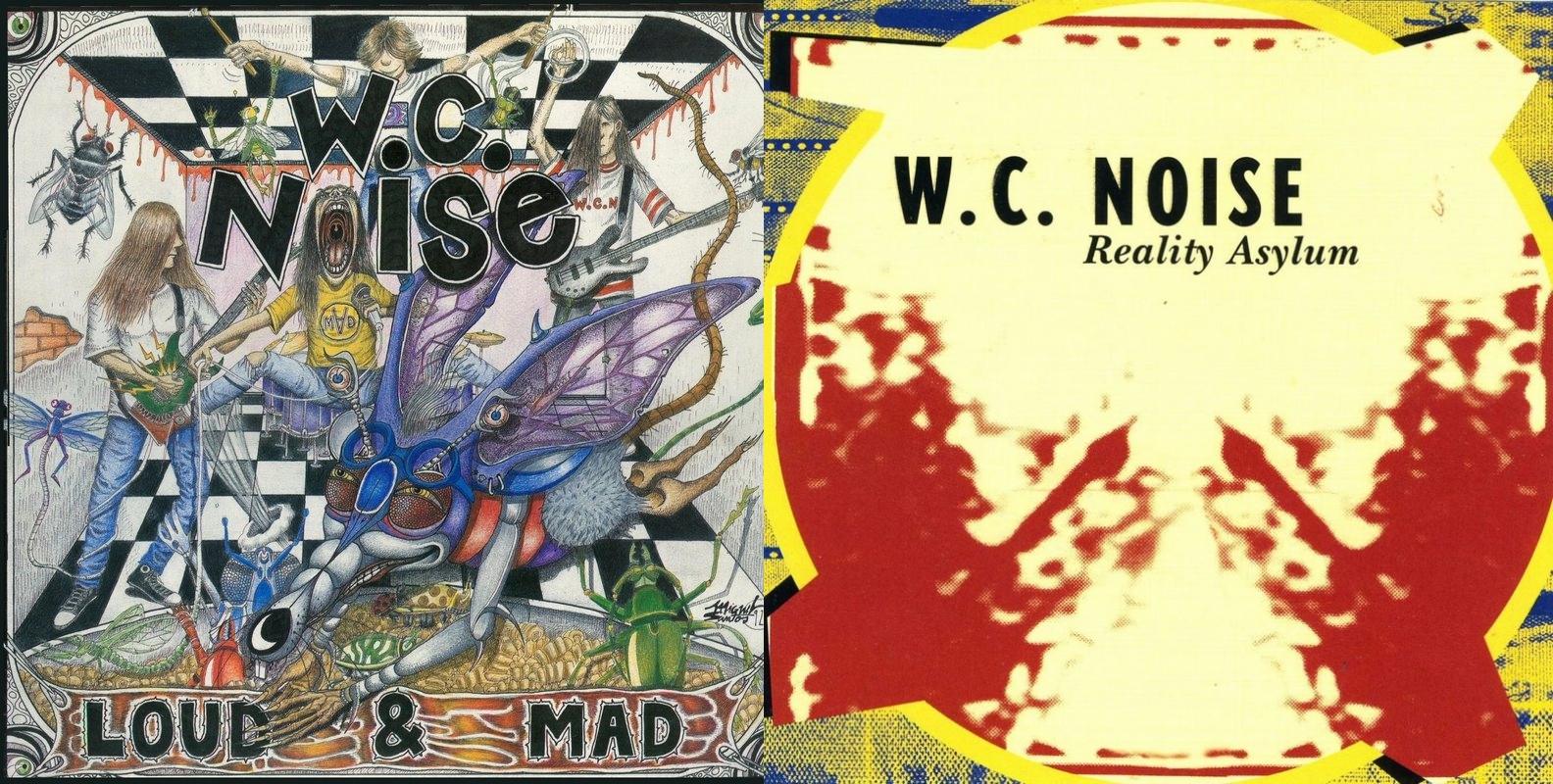
The fruit of this union did not take long to blossom. Between September and October of that year, WC Noise returned to Valadares and Rec’n’Roll Studios to record their historic debut album, “Loud & Mad”, released in December 1992. The year 1993 became synonymous with the road: a long and intense promotional tour that took the band from one end of the country to the other. This golden phase also brought a new bassist, Vítor (ex-Overhead), and international expansion, including a tour in Spain and the licensing of their first album there by the Treboada label.
In 1994, the band proved they were no flash in the pan by releasing their second full-length album on CD, the acclaimed “Reality Asylum”. The impact of the record was so strong that it crossed borders, earning a German release via Milestone Music, which proudly featured an alternative cover for the international market. It was living proof that Portuguese metal possessed the quality and maturity to compete at the highest level in Europe.
Today, WC Noise are remembered as true pioneers of Portuguese thrash metal and as musicians of extraordinary technical evolution. They personified and led the rebirth of a more alternative metal scene in Portugal during the 1990s. Despite the standard lineup changes over the years, they always maintained their integrity and achieved a highly successful career until their dissolution in 1996. They left an indelible mark on the history of national heavy music—and a legacy that still echoes in the hearts of those who lived it.