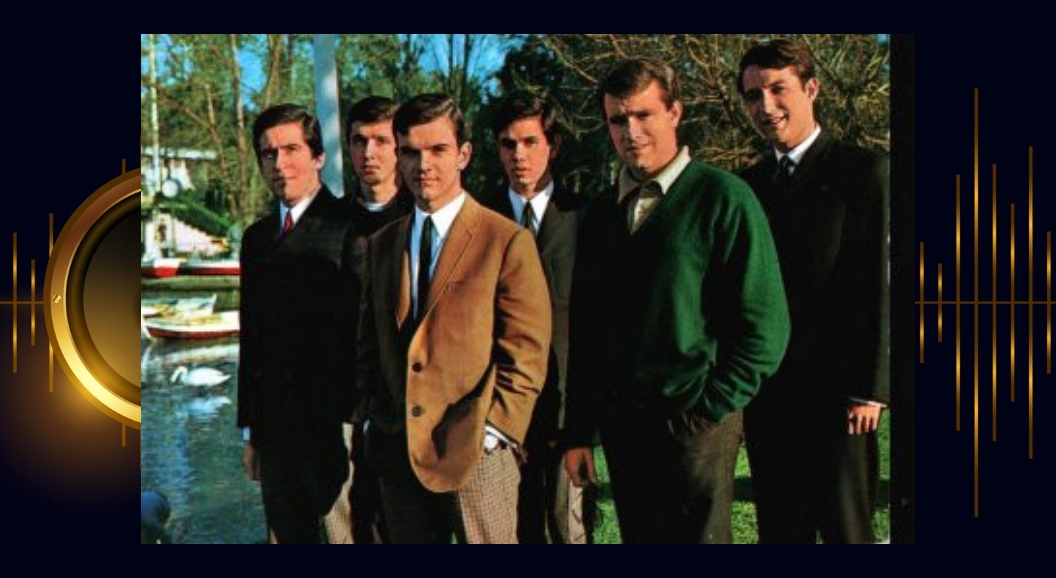
In the early 1960s, at the Jaime Moniz High School on the island of Madeira, one of the most defining pop/rock and ié-ié bands in Portugal was born: Conjunto Académico João Paulo. Blending dynamic arrangements, covers of international hits, and a strong original identity, the group crossed generations and secured its place in the national songbook.
Rise and Consolidation in the 1960s
National recognition came in 1964 when the band members traveled to mainland Portugal, achieving remarkable success through performances at the prestigious Teatro Monumental and on the television show TV Clube.
That same year, the group made its recording debut with its first Extended Play (EP)—the dominant release format of the era—featuring the tracks “La Mamma”, “Hello Dolly”, “Eu Tão Só” (an adaptation of “Et Pourtant”), and “Ma Vie”. Their visibility and musical quality earned them the 1964 Special Press Award, presented in April 1965.
With their second EP—which gathered “It’s Over”, “Se Mi Vuoi Lasciare”, “Chove”, and “Greenback Dollar”—the initial seven-member lineup settled into the classic configuration that made them famous:
- João Paulo Agrela: Keyboards
- Sérgio Borges: Lead vocals, lyricist for original tracks and adaptations
- Carlos Alberto Lomelino Gomes: Guitar and principal composer of original songs
- Rui Brazão: Rhythm guitar
- Ângelo Moura: Bass guitar
- José Gualberto: Drums
Hits, Song Festivals, and Recording Innovations
A string of impactful releases followed. The EP “+ 1 Disco = 4 Sucessos” included tracks such as “Se Piangi Se Ridi”, “Nunca Mais” (a cover of “You’ve Lost That Lovin’ Feelin'”), “Hully Gully do Montanhês”, and “Oh Dis Marie”. Shortly after, they released another notable work featuring “Capri C’est Fini”, “Milena (a da Praia)”, “Diz-lhe”, and “Non Son Degno Di Te”.
The year 1966 marked a high point in the band’s career:
- RTP Festival da Canção (1966): Sérgio Borges took 2nd place performing “Nunca Direi Adeus”. Following this success, they released the EP “Eurovisão”, which featured “Balada A Uma Rapariga Triste”, “Ciao”, “Nunca Direi Adeus”, and a cover of “Ele e Ela” (the winning entry by Madalena Iglésias).
- Pioneering the LP Format: They released the album “Conjunto Académico João Paulo no Teatro Monumental”. This full-length Long Play (LP) stood out in a market where the format was still in its infancy in Portugal, combining previously released tracks with new originals and covers such as “Stasera Pago Io”, “La Nuit”, and “Jezebel”.
Their discographic output remained prolific through the end of the decade with several EP releases:
- “L’Amour Est Bleu” (including “Puppet On A String”, “I Hate These Moments”, and “Sombras”)
- “Poema de um Homem Só” (featuring “Monday Monday”, “Oasis”, and “When A Man Loves A Woman”)
- “Kilimandjaro” (featuring “Sue-Lin A Minha Chinesa”, “Cosa Vuoi Da Me”, and “Quando Nasce O Amor”)
- “O Louco” (featuring “Si Lo So”, “Tu E Eu” — a cover of “Happy Together” —, and “I Just Don’t Know What To Do With Myself”)
This initial phase came to a close with the EP “A Shadow Rounds The Tomorrow Sounds”, at a time when the band’s activities were forcibly paused due to several members being drafted into military service during the Portuguese Colonial War.
Collaborations, Restructuring, and the 1970 Triumph
During this transitional period, the band collaborated with South African singer Vickie on two singles, most notably featuring the tracks “Who Have Nothing” and “Try A Little Tenderness”.
The year 1970 marked a major comeback: Sérgio Borges won the RTP Festival da Canção 1970 with the song “Onde Vais Rio Que Eu Canto”. As a solo artist, the lead singer also released recordings of other standout songs from that festival, including “Canção de Madrugar”, “Corre Nina”, “A Voz do Chão”, and “Velho Sonho”.
With the addition of two former members of Quinteto Académico—Adrien (drums) and Zé Manel (saxophone)—the group officially adopted the name Sérgio Borges e O Conjunto João Paulo. This phase produced new records, including:
- EP featuring “Nascer (Birth)”, “Champs Elysées”, “O Salto”, and “A Uma Gina”
- EP “Lavrador” (an adaptation of “Aguarela Portuguesa” by Zeca do Rock), which also contained “Serei um Dia o Mar”, “Estrada Branca”, and “Paul da Serra”
- Single “Meu Corpo E Minha Seiva” / “God Of Negroes”
- Single “Meu Pão, Casa, Pedra, Fome” / “Pearls In Her Hair” (released in 1972)
The End of the Band: When and Why
The band officially came to an end in the late 1970s. Rather than a sudden breakup or public conflict, the group’s conclusion was the result of a gradual decline brought on by three key factors:
- Forced Interruption by the Colonial War: The draft of several members into mandatory military service during the Portuguese Colonial War broke the band’s regular release cycle and momentum at the height of their late-1960s popularity.
- Lineup Changes and Shift Toward Solo Identity: When the group resumed activity in the 1970s, the lineup was restructured and rebranded as Sérgio Borges e O Conjunto João Paulo. Following Sérgio Borges’s victory at the 1970 RTP Festival da Canção, the spotlight increasingly shifted toward his solo persona.
- Changing Musical Landscape: Following the April 25 Revolution in 1974, cultural and musical trends in Portugal shifted dramatically toward protest songs, progressive rock, and new genres, rendering the 1960s ié-ié pop style less prominent. Releases slowed down (their last vinyl single was issued in 1972), leading the group to naturally dissolve by the end of the decade.
Legacy and Reissues
The impact of Conjunto Académico João Paulo continued to be celebrated over the following decades:
- 1981: Inclusion of a compilation dedicated to the group in the prestigious series “Antologia da Música Popular Portuguesa”.
- 1993: Release of “Os Grandes Êxitos do Conjunto Académico João Paulo” by EMI-VC, marking the debut of the group’s repertoire on Compact Disc (CD).
- Caravela Collection (1996/1999/2004): Integration of the band’s musical heritage alongside seminal Portuguese acts like Sheiks and Quarteto 1111.
- 2008: Release of the double-CD compilation “Eu Tão Só – Integral vol. 1”.
Remembering the Members
Over the years, Portugal bade farewell to the musicians who brought this historic project to life:
- José Gualberto (drums) passed away in 2004.
- João Paulo Agrela (keyboards and founder) passed away on April 23, 2007.
- Sérgio Borges (vocalist) passed away in Funchal on December 17, 2011.
- Carlos Alberto Lomelino Gomes (guitarist and primary songwriter) passed away in Funchal on April 5, 2020.
Conjunto Académico João Paulo remains one of the cornerstone acts in the modernization of Portuguese pop-rock and popular music in the 1960s, showcasing island talent that won over the nation and left an indelible mark on the country’s recorded music history.