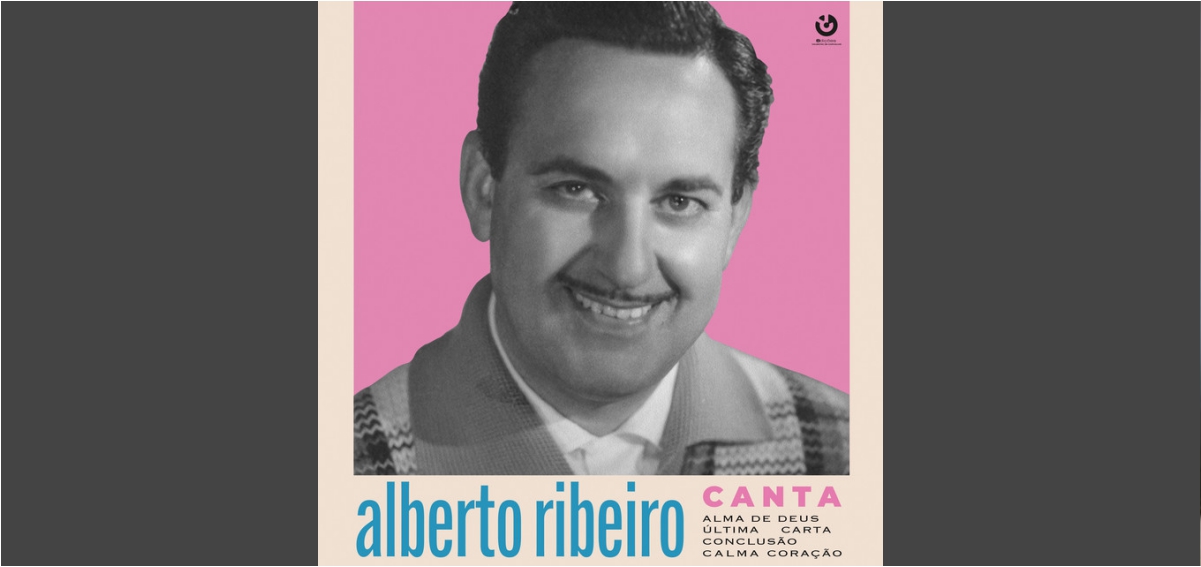
Alberto Dias Ribeiro, born on February 29, 1920, in Ermesinde, in the municipality of Valongo, stands as one of the most iconic and talented figures of 20th-century Portuguese popular culture. Raised in an artistically inclined family—where two of his siblings were also singers—he distinguished himself from a young age through the exceptional quality of his vocal range. Possessing a warm timbre, remarkable ease in reaching high notes, and an uncommon vocal range, the artist quickly won over audiences and established himself on the national music scene.
During the late 1940s and the 1950s, the tenor reached the height of his prestige and popularity in the Portuguese arts landscape. His striking physical presence and sophisticated style made him the quintessential leading man (galã) and the ideal performer for operetta and revue theater (teatro de revista), genres of immense popular appeal at the time. Among his most prominent theatrical performances were iconic productions at the Teatro Variedades, such as the operetta O Colete Encarnado (1946), the revue Sempre em Pé (1947), the operetta Alfacinha de Gema (1947), and A Leiteira de Entre Arroios (1950).
In parallel with his theatrical stage career, his film career was brilliant and pivotal in consolidating his status as a star. His cinema debut took place in 1946 with the films Ladrão de Luva Branca and Um Homem do Ribatejo, but it was the following year that he starred in what would become one of the biggest box-office hits in Portuguese cinema history: Capas Negras (1947). In this historic movie, co-starring alongside the legendary fadista Amália Rodrigues, he played the role of José Duarte and immortalized songs that became embedded in the collective memory.
The success of his artistic partnership with Amália Rodrigues extended to the stage as well, with both headlining the cast of the play Sala Júlia Mendes in 1946, premiered at the prestigious Parque Mayer. His success in cinema continued to solidify in subsequent years through prominent roles in major feature films, including Cantiga da Rua (1950), Rosa de Alfama (1953)—in which he portrayed Captain José—O Homem do Dia (1958), where he also took on the role of producer, and Canção da Saudade (1964).
Among the memorable repertoire he immortalized, the song “Cartas de Amor” (1946) stands out as one of his most notable creations in revue theater and romantic music, later widely popularized by Tony de Matos. Similarly, in the film Capas Negras, he launched the first recording of the emblematic song “Coimbra” (1947)—composed by Raúl Ferrão and José Galhardo—a famous fado that became an academic anthem and achieved international renown.
Another fundamental landmark in his discography and career is the song “Maria da Nazaré” (1948), which he co-wrote with poet António Vilar da Costa. This piece became a resounding success at the time, having been originally created for the famous operetta Nazaré. The composition’s popularity was so enduring that, in the early 1960s, the singer returned to the stage specifically to celebrate the 25th anniversary of that same operetta, performing this classic track once again for his audience.
Across three decades of continuous activity, the singer built a catalog filled with hits that marked generations. Among his greatest hits are songs of immense lyrical and vocal weight such as “Soldados de Portugal” (1946), the lively track “Marianita” (1947), the popular religious-themed fado “Senhora da Nazaré” (1948), the passionate song “Eu Já Não Sei” (1950)—later re-recorded and performed by singers like Florência—and the neighborhood tribute “O Porto É Assim” (1953), which proudly celebrated his northern roots.
Despite ongoing acclaim and enduring affection from the public, the artist unexpectedly decided to retire from the artistic scene and public life. He withdrew into a private silence away from the spotlight, which he maintained until the end of his days, intriguing fans and critics alike. Nevertheless, his legacy was preserved and rediscovered by subsequent generations through various re-releases and compilations of his works, notably the collections O Melhor de Alberto Ribeiro (released by EMI-Valentim de Carvalho in 1991) and O Melhor dos Melhores n.º 1 (released by Movieplay in 1994).
Alberto Ribeiro passed away in Porto on June 26, 2000, at the age of 80, leaving an indelible mark on the history of music, cinema, and theater in Portugal. In recognition of his valuable cultural contribution and for raising the profile of his hometown, his name was immortalized in Ermesinde’s toponymy with a street named in his honor. His unique, elegant, and finely tuned voice continues to be remembered as one of the most genuine expressions of the golden age of Portuguese song.