There are names in music history that never limit themselves to mere notes or chords; they become true emblems of an era. Such is the case with Capitão Fantasma, a band that helped shape the identity of rock sung in Portuguese with a raw, visceral, and absolutely authentic energy.
Revisiting the trajectory and legacy of this unmistakable project quickly reveals that their music was never just a quick consumer product. It was always a state of mind, an artistic urgency to give voice to deep anxieties through punk rock n’ roll and a punkabilly spirit.
At the center of this creative storm was always the striking figure of Jorge Bruto and his road companions, who viewed creation not as a blind race to the top of the charts, but as a natural extension of who they are. The visceral honesty of their compositions continues to echo in a very unique way in the memories of those who experienced the band’s intense live concerts.
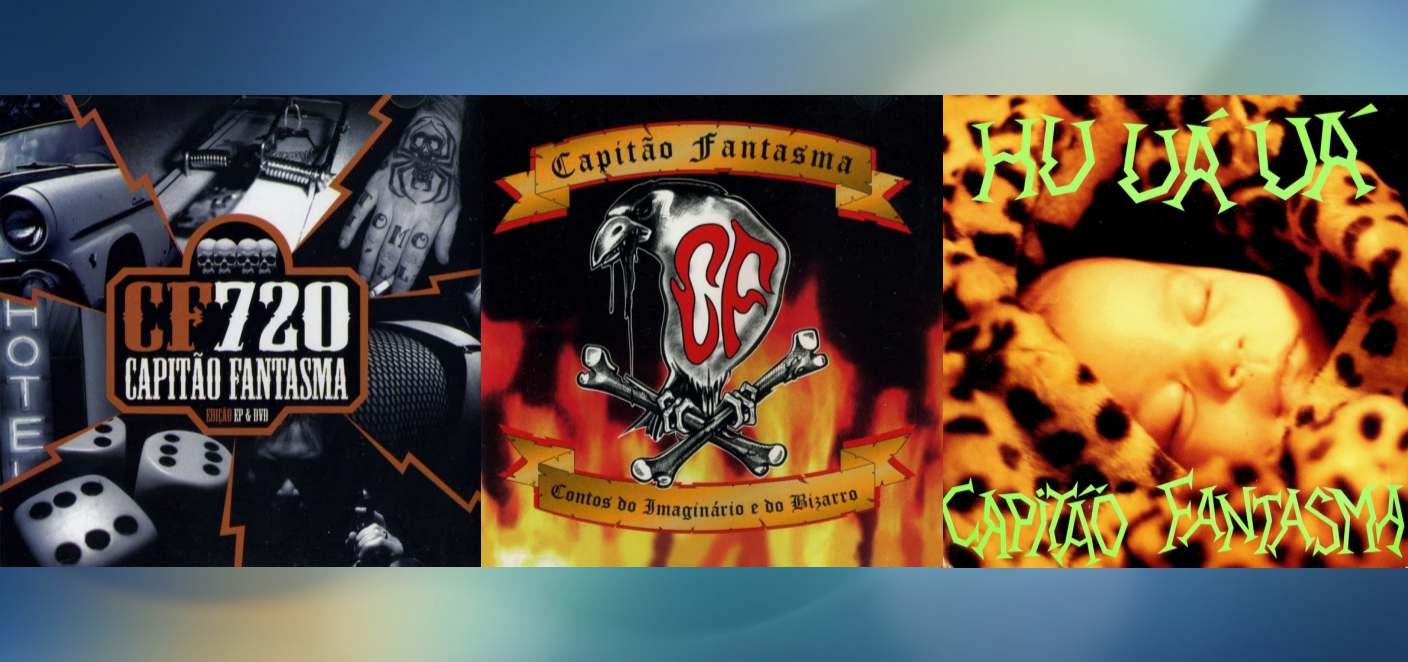
The cultural impact of defining albums like Hu Uá Uá or Contos do Imaginário e do Bizarro reveals a group that knew how to navigate between the raw power of the stage and the richness of the Portuguese language. For them, singing in their mother tongue was never a commercial obstacle, but rather a tool for genuine connection with their audience.
Listening to Capitão Fantasma today is inevitably an exercise in nostalgia, but also an acknowledgment of how far ahead of their time they were. The choruses sung in unison by entire crowds demonstrate that the empathy generated by their music bravely resists the relentless test of time.
More than recorded tracks on vinyl or CD, this group’s journey reflects an inexhaustible passion for writing, urban poetry, and intelligent provocation. Each lyric served as a sharp reflection of everyday life, transforming the mundane into raw, memorable art.
Even when projects intersect with the inevitable breath of new times or enter phases of pause and reflection, respect for the past remains intact. The essence of Capitão Fantasma never needed excessive commercial gimmicks to stay relevant within the Portuguese music scene.
The recent rediscovery of special and commemorative reissues proves that the fan community remains hungry for this authentic musical heritage. There is a sense of poetic justice in watching classic records shine once again, showing newer generations how rock was made with soul and substance in Portugal.
Ultimately, talking about Capitão Fantasma means celebrating the resilience of those who make art out of pure vocation and a deep need for expression. The enduring certainty remains that as long as there is someone willing to listen to good music with attitude, the spirit of these legends will remain vibrant and alive.