In the late 1990s, Lisbon was buzzing with a unique cultural energy, shaped by the meeting of different backgrounds and life experiences. It was precisely within this setting of shared expression that Philharmonic Weed was born in 1997, a collective that quickly positioned itself as one of the most vibrant promises of the new Portuguese music scene.
The band’s identity directly reflected the multiculturalism of the capital, naturally fusing the Mozambican and Angolan roots of its members. This genuine blend of values and artistic colors gave life to a project that combined soul and strength, standing out for its constant search for new sounds and rhythms.
More than just making music, the group found in reggae, afro, hip-hop, funk, and jazz the ideal language to express their concerns. For Philharmonic Weed, the groove served as a true weapon of expression, and the lyrics were approached with a deep sense of social responsibility.
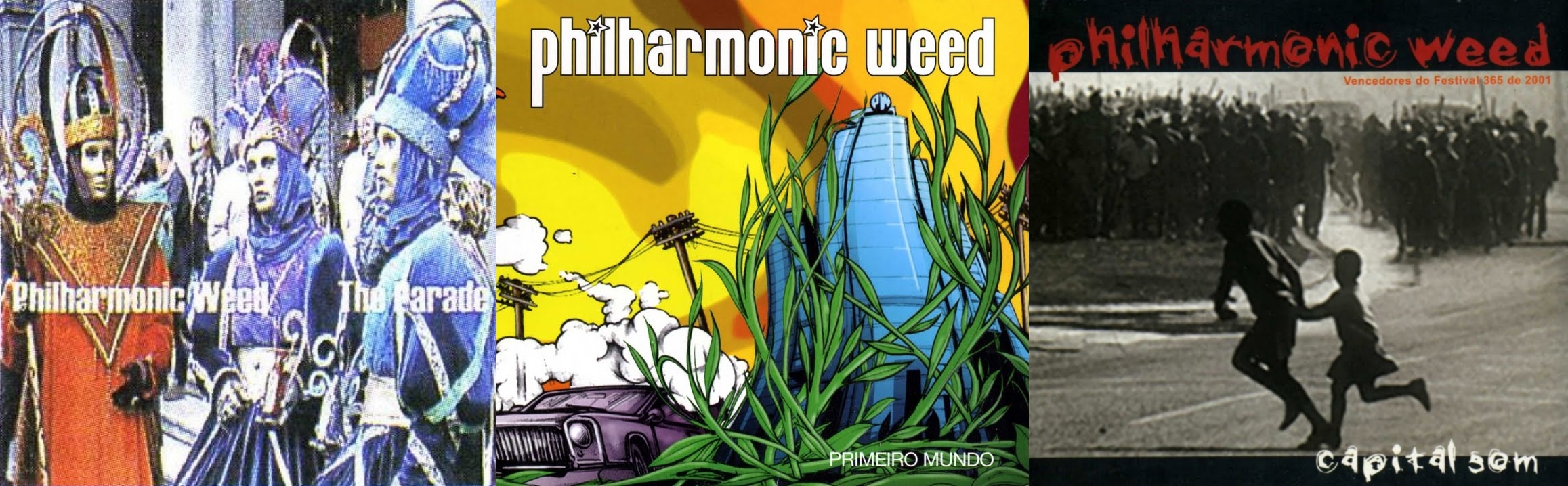
The journey began to take a more defined shape when they released the EP “Capital Som” in 2003 through Independent Records, presenting their first five tracks to the public. Before that, the band had already been leaving its mark on memorable records, such as participating in the compilation album “Offline” in 2001.
Recognition of the band’s eclecticism was also evident in special invitations, such as their presence on the GNR tribute album, “Revistados 25-06,” and the “Copa Reggae” compilation, released in 2006. The group’s international path gained a major boost back in 2001, when they represented Portugal at the World Youth Festival in Panama.
This sonic maturation resulted in the recording of their first full-length album, tracked between 2005 and 2006 at the Nascer do Som studio. The project benefited from the collaboration and production of Francisco Rebelo and João Gomes, musicians well-known for their work with Cool Hipnoise.
From this process came “Primeiro Mundo,” released by Footmovin, an album that consolidated the group’s ability to transform socially conscious lyrics into engaging music. The songs proved it was possible to dance and think at the same time, touching upon daily societal struggles with sensitivity.
The project’s original lineup was formed in Lisbon by Milton Gulli on vocals and guitar, Marisa Gulli on drums, and Ricardo Bicho on bass. In the beginning, the young musicians already had a clear vision of the sound they wanted to create, even as they dealt with the natural technical limitations of those just starting out.
Over time, the band’s structure transformed to keep pace with its members’ artistic evolution. Ricardo Bicho transitioned to acoustic guitar, Milton Gulli took over lead vocals, and Marisa Gulli dedicated herself to percussion, opening up avenues for new musical directions.
New talents joined the journey over the years, such as Rita Pinho on vocals and keys in 1999, and later Tiago Romão, Renato, and Carlos Santos in the rhythm section. This rotation brought fresh dynamics to a project that was characterized precisely by its open and collaborative nature.
In parallel, the members of the Weeds always kept their horizons open, joining other prominent projects on the national scene, such as Cacique 97 and Doctor J. While Philharmonic Weed embraced a broad vision of Black music, these other avenues allowed them to explore specific niches like afrobeat.
The collective’s beautiful story came full circle in 2009, when they announced the end of their activities with an emotional farewell concert at Musicbox in Lisbon. The group’s legacy, however, remains alive in the city’s cultural memory and through the continuity of its musicians in projects that still enrich the music scene today.