
This article was translated from a post originally published here: https://rocknosotao.blogspot.com/2007/03/rock-em-stock-memria-e-as-msicas.html
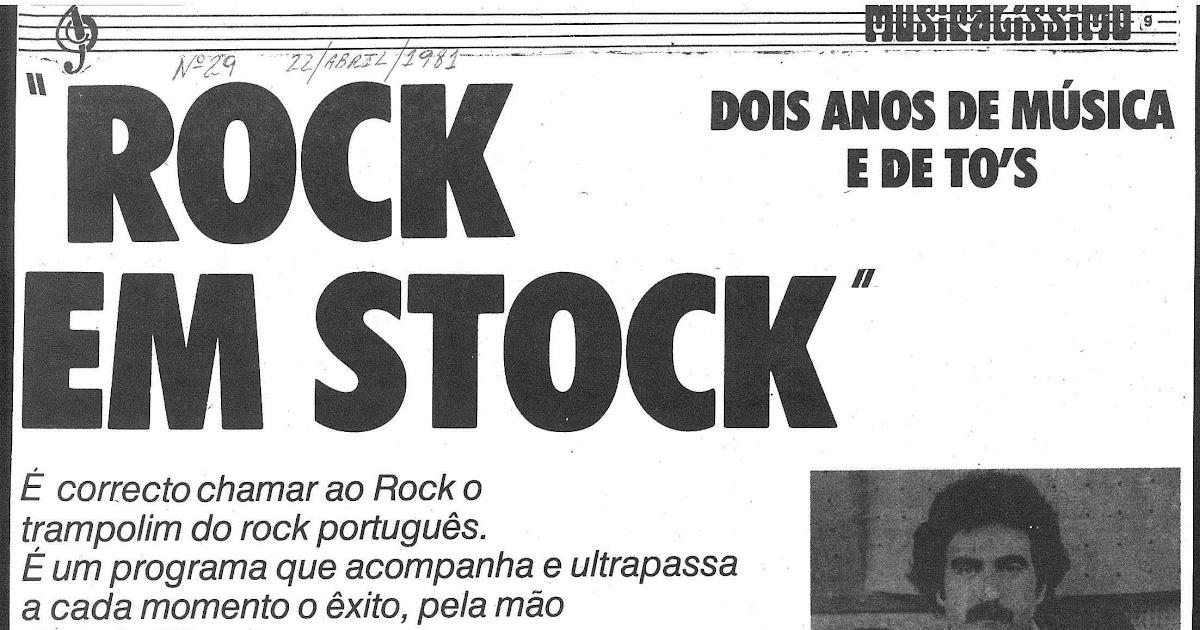
On April 9, 1979, Luís Filipe Barros took to the airwaves on Rádio Comercial to launch Rock em Stock. Right from day one, the mission was clear: to open a window to the world and introduce Portuguese listeners to fresh, exciting bands they’d likely never heard before. Keeping a pulse on the international scene, the show became a vital lifeline for emerging movements like Punk, New Wave, and the New Wave of British Heavy Metal (NWOBHM).
The show also played a vital role in championing homegrown talent, widely credited as a driving force behind the Portuguese rock “boom” of the early 1980s. It regularly spun tracks from bands like Xutos & Pontapés, Rui Veloso, Táxi, Jáfu’mega, GNR, Go Graal Blues Band, Trovante, Roxigénio, UHF, Arte e Ofício, and Trabalhadores do Comércio, among many others. And “regularly” is no exaggeration—songs were often played two or more times during the same broadcast, especially if they were brand-new releases or Rock em Stock exclusives, which happened all the time.
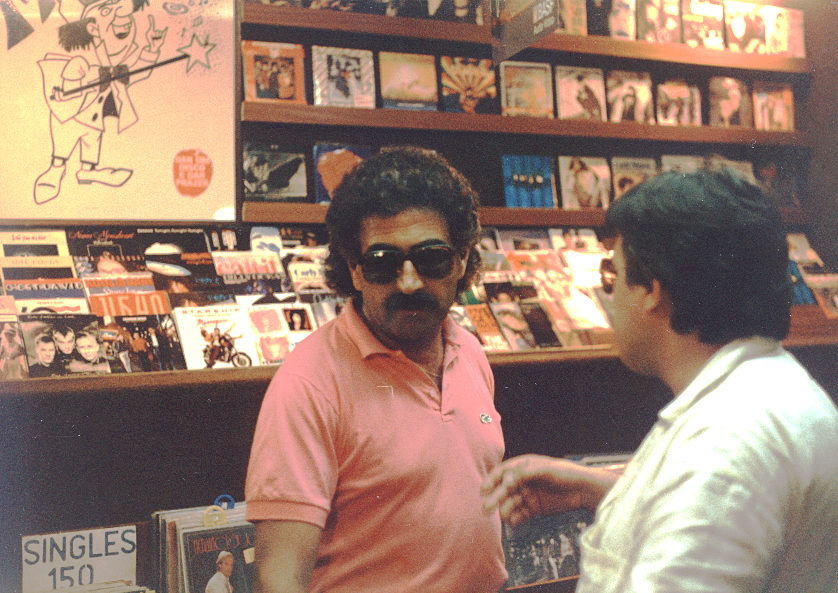
While music was the heart of the program, its true magic lay in the unmistakable style of Luís Filipe Barros—affectionately nicknamed “Berros.” His free-spirited, spontaneous, witty, and completely open-minded delivery came as a breath of fresh air in an otherwise stiff and predictable Portuguese radio landscape. Over the years, the microphone was also shared by a memorable lineup of other voices, including Jaime Fernandes, Rui Morrison, Paulo Coelho, Ricardo Camacho, Bernardo Brito e Cunha, and Ana Bola.
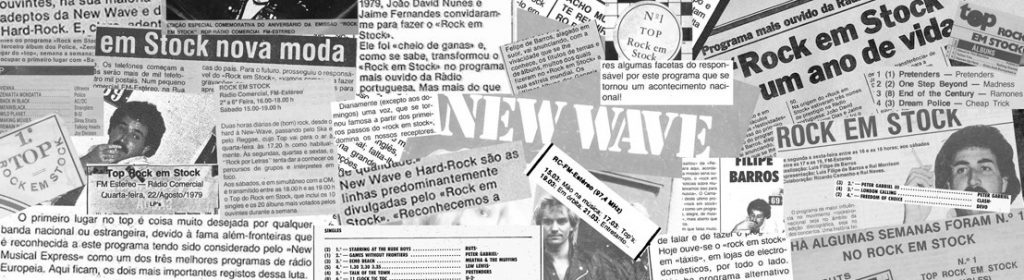
Before long, Rock em Stock naturally climbed to the top of the FM Stereo ratings, becoming a powerhouse for record promotion. Tracks featured on the show frequently crossed over into the national sales charts, and record labels even began slapping stickers on album covers boasting that a release had hit No. 1 on the Rock em Stock chart—a testament to the show’s massive sway with music fans.
To celebrate its legacy, a double CD compilation was released in 1999 for the program’s 20th anniversary, followed by a second volume in 2000. These collections brought together iconic tracks from Styx—whose “I’m OK” served as the show’s unforgettable theme song—alongside Machiavel, Blondie, The Tourists, Ramones, Cheap Trick, Nina Hagen, Devo, New Musik, April Wine, ZZ Top, and more.
On January 13, 1982, listeners were blindsided by the news that Luís Filipe Barros was stepping down from Rock em Stock, with his final broadcast set for the end of the month. Coming from the host of Portugal’s top-rated FM radio show, the announcement sent shockwaves across the country—and the reveal that Ana Bola would take his place felt so surreal that many thought it was an early April Fools’ joke.
In truth, a shake-up had been brewing for a year. Early in 1981, there were already plans to hand the reins over to António Sérgio, as Barros had expressed a desire to move to Rádio Comercial’s AM band—the same official explanation given when he finally walked away in 1982.
Behind the scenes, however, the reasons ran much deeper. Throughout 1981, Barros openly admitted to growing weary of the show’s format. He was tired of the relentless pressure from record labels, frustrated by the quality of much of the domestic music being pushed onto the station, and unwilling to spin tracks he didn’t believe in. Fiercely protective of his creative freedom, he drew a hard line in the sand: “Rock em Stock is not at the service of the record labels.”
Tapping Ana Bola as his successor sparked immediate backlash from both devoted fans and the press. Celebrated primarily as a comedic actress, she had zero radio experience—a gamble that Bola herself would later describe as “an act of recklessness” on the part of Rádio Comercial’s director, João David Nunes. Adding fuel to the fire, Barros’s exit meant the show would lose its flagship Saturday slot and drop the iconic Rock em Stock chart, a beloved staple since April 1979.
When Bola finally took the mic, her debut was nothing short of chaotic. Just days before going on air, she had broken her arm, leaving her struggling to juggle the turntables and studio equipment. Years later, she looked back on that broadcast as “a disaster,” confessing she nearly had a panic attack. Listeners reacted with a wave of outrage—flooding the station with angry letters, protests, and petitions—but management refused to budge.
January 13, 1982, marked the beginning of the end. With roughly two weeks left on the clock for Luís Filipe Barros, a golden chapter in Portuguese radio history was drawing to a close.
Falta dizer que este artigo foi traduzido de uma publicação originalmente feita aqui:
https://rocknosotao.blogspot.com/2007/03/rock-em-stock-memria-e-as-msicas.html
Detalhe adicionado no inicio do artigo, obrigado pela observação.
Obrigado pela informação ao qual irei colocar a fonte ou reescrever o texto!