
Anyone walking through the avenues of the Benfica Campus, in the vibrant Portuguese capital, is frequently enveloped by a floating mosaic of sounds. Piano notes drift through the air, crossing paths with the metallic timbre of a trumpet or the improvised groove of a jazz double bass. This sonic ecosystem is no accident; it is the daily life of the Lisbon Higher School of Music (ESML), a public institution that has transformed into the true heart of musical education in Portugal, where raw talent acquires the necessary technique to conquer the world stage.
The history of ESML is inseparable from the evolution of artistic education in the country. Founded in 1983 under the umbrella of the Polytechnic Institute of Lisbon (IPL), the institution emerged as the direct result of a profound and necessary restructuring of the former National Conservatory. By building upon these historical foundations, the school not only inherited the prestige of past generations but also took on the mission of projecting Portuguese musical pedagogy into modernity, uniting classical erudition with the demands of the new century.
More than just an educational institution, ESML is today a benchmark of architectural excellence that catches the eye of anyone who visits. Its current building, designed by the acclaimed architect João Luís Carrilho da Graça, reflects the very essence of music: harmony, structure, and lightness. Opened in the 2000s, the infrastructure was honored with the prestigious Valmor and Municipal Architecture Prize in 2008, a recognition that celebrates a space designed down to the smallest detail so that acoustics and creativity can flow without barriers.
Within these award-winning walls, a vibrant and focused community of around 500 students share the same dream. Here, music ceases to be a mere pastime and is treated with the scientific and artistic rigor it deserves. The environment is one of humanized sharing, where the focus lies on the individual and collective development of promising young talents, all under the watchful eye of a highly qualified and internationally competitive faculty.
The school’s curricular offerings are impressive in their scope, divided into bachelor’s and master’s degrees that touch upon practically every corner of the musical ecosystem. In the flagship Bachelor’s Degree in Music, students specialize in pathways ranging from Voice, Composition, and Orchestral Conducting, to Wind Instruments, Plucked Strings, and Organ. There is also a prominent place for Early Music—which rescues centuries-old heritage—and Jazz, which injects a dose of contemporaneity and improvisation into the corridors of Benfica.
However, ESML understands that contemporary music does not live isolated in an ivory tower, constantly adapting to new market and societal realities. It is from this vision that innovative programs are born, such as the Bachelor’s Degree in Music Technologies, which bridges art with sound engineering and digital production, and the Bachelor’s Degree in Music in the Community. The latter takes on a deeply humanitarian and social role, preparing professionals capable of using music as a tool for inclusion, therapy, and cohesion in neighborhoods, hospitals, and care homes.
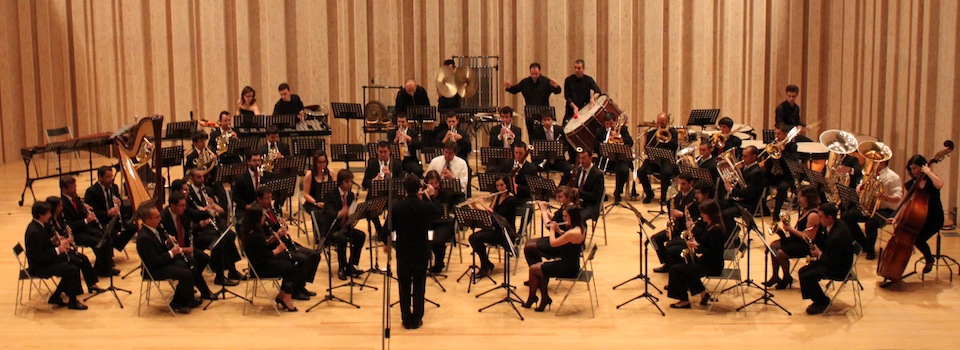
Practical experience is the true engine of this academy. Students’ daily routines are filled with intense rehearsals, masterclasses with international virtuosos, and public performances that challenge the nerves of a debut. Through ensembles like the ESML Wind Orchestra and various chamber groups, students have the opportunity to experience the collective symbiosis of a grand performance, realistically preparing themselves for the demanding global job market.
To look at the Lisbon Higher School of Music is, therefore, to contemplate a human laboratory where the past and the future meet in perfect harmony. By balancing technical rigor with a refined artistic sensitivity, ESML continues to shape not only virtuous musicians, but also citizens who are deeply aware of the social impact of their art. As long as its rooms continue to echo with new compositions and arrangements, the Portuguese and international cultural landscape is guaranteed an inexhaustible source of renewal and beauty.