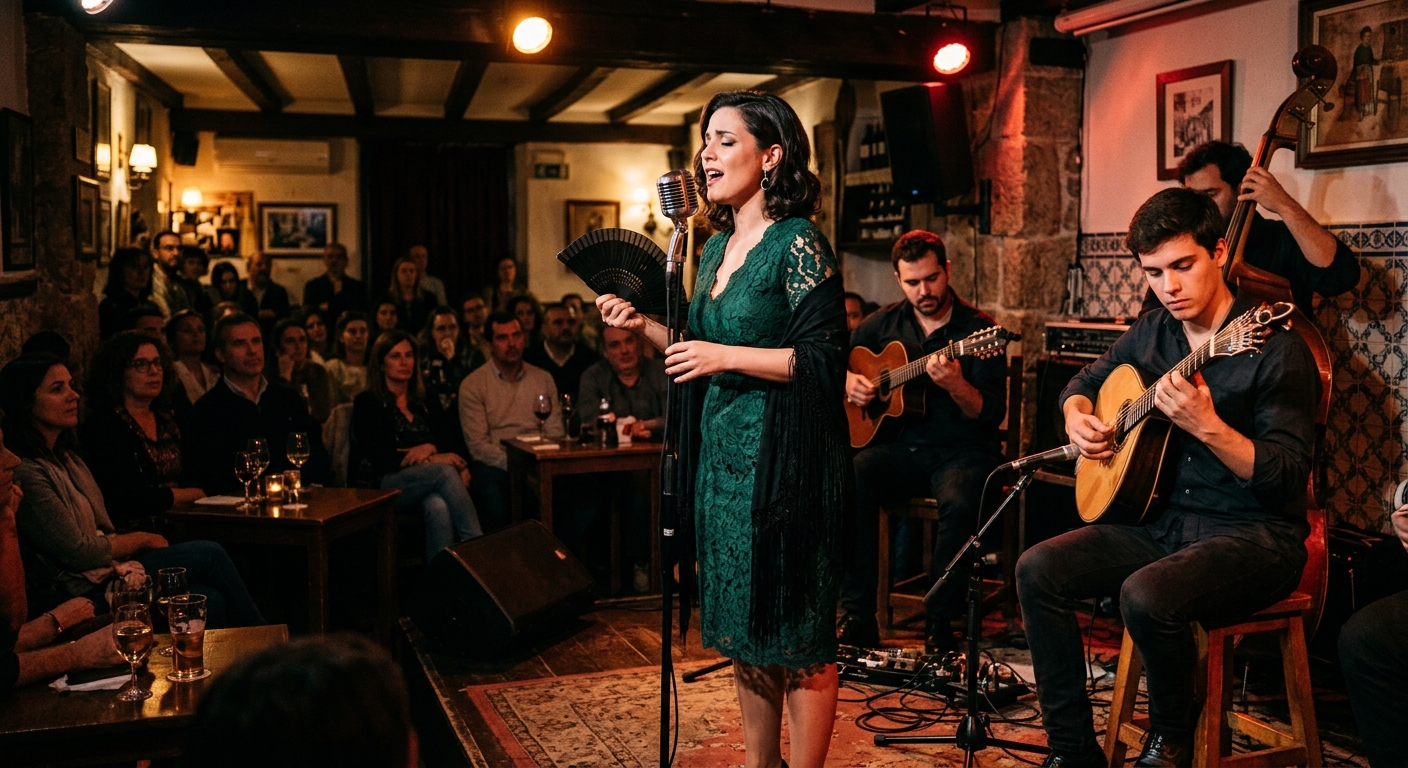
Modern Fado (or Novo Fado) represents one of the most fascinating cultural transformations in contemporary Portuguese music. Far from breaking with its origins, this movement serves as a living bridge between past heritage and future artistic paths. By reinterpreting traditional melancholy with new aesthetic forms, fado liberated itself from conceptual constraints to engage in direct dialogue with the 21st-century world.
Historically associated with the working-class neighborhoods of Lisbon and the academic atmosphere of Coimbra, fado faced a period of stagnation following its mid-20th-century popularity peak driven by Amália Rodrigues. However, at the turn of the millennium, a new wave of fadistas rediscovered the poetic and musical richness of urban song, triggering an unprecedented revival.
The defining hallmark of modern fado is its openness to other musical genres. While traditional fado relies strictly on the Portuguese guitar, fado guitar (viola de fado), and acoustic bass, the contemporary style embraces the piano, cello, percussion, and subtle electronic elements. This instrumental versatility expanded the musical palette, making the genre accessible to broader global audiences.
Beyond sonic innovations, lyrical evolution played a crucial role in rejuvenating the genre. While core themes of saudade (deep longing), love, and fate remain central, current artists draw on contemporary poetry and original songwriting. This updated poetic language reflects modern daily life while preserving fado’s signature emotional authenticity.
Key figures and landmark albums defining this generation include:
- Mariza: The foremost global ambassador of Portuguese music over the past two decades. Her breakthrough debut album, Fado em Mim (2001), revitalized the genre with powerful vocals and flawless arrangements, featuring iconic tracks like “Ó Gente da Minha Terra” and “Chuva”.
- Ana Moura: A boundary-pushing artist praised by icons like Prince and the Rolling Stones. Her multi-platinum album Desfado (2012), produced by Larry Klein, seamlessly blended fado with pop, jazz, and soul, laying the groundwork for her later urban and African-influenced work in Casa Guilhermina (2022).
- Carminho: Renowned for her deep roots in purist fado and collaborations with Brazilian popular music. Her album Alma (2012) achieved international acclaim, while Maria (2018) established her creative authority as a producer and songwriter on tracks like “A Saia da Carolina”.
- Gisela João: Celebrated for bringing a raw, visceral energy that connects with younger audiences. Her self-titled debut album Gisela João (2013) proved that traditional fado can sound urgent and contemporary without losing its authentic core.
- António Zambujo: Known for his sophisticated blend of fado with Alentejo vocal traditions (cante alentejano), bossa nova, and jazz. His acclaimed album Quinto (2012) highlighted his minimalist instrumentation and subtle interpretations on tracks like “Flagrante” and “Lambreta”.
- Camané: Widely regarded as the leading male voice of his generation, balancing strict traditional metrics with modern introspective sensitivity. His album Sempre de Mim (2008), produced alongside the late José Mário Branco, stands as a benchmark of artistic maturity.
- Sara Correia: Representing the new generation of powerful, expressive fado (fado com garra). Her Latin Grammy-nominated album Do Coração (2020) blends traditional roots with modern production by Diogo Clemente.
Today, emerging artists like Teresinha Landeiro and Beatriz Rosário continue to integrate modern urban influences, ensuring that fado remains a dynamic, living art form capable of moving audiences worldwide.